
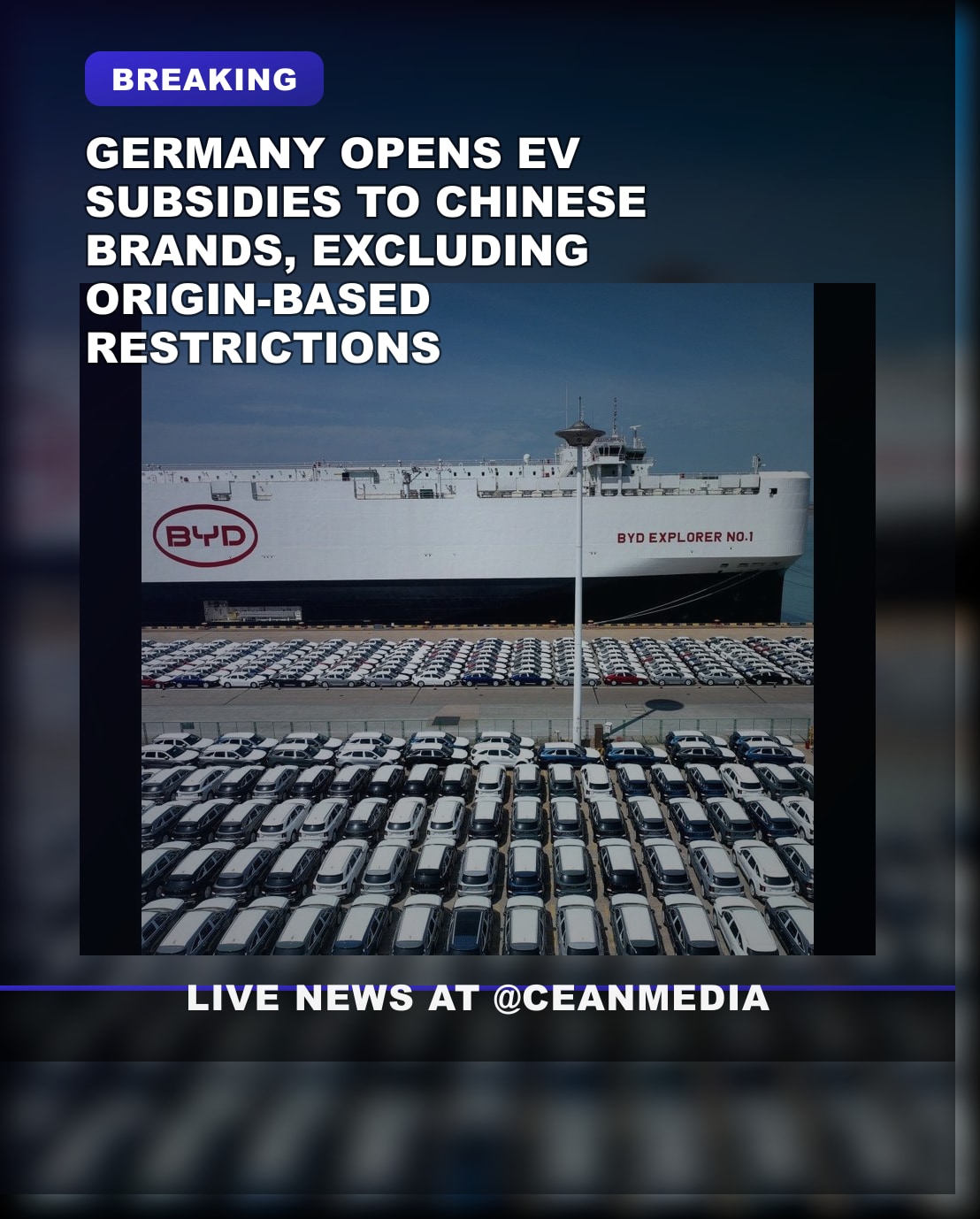
Germany has announced that its €3 billion ($3.5 billion) electric vehicle (EV) subsidy program will be accessible to Chinese car brands. This move marks a strategic decision by the German government to open the program beyond domestic automakers and their European allies, aiming to encourage a broader adoption of electric vehicles across the country.
Despite concerns raised by some domestic industry stakeholders, officials confirmed that no restrictions based on the origin of the vehicles will be imposed. This means Chinese EV manufacturers can qualify for rebates and incentives on their electric models sold in Germany, potentially expanding their presence in the European market. The decision is seen as a way to promote competition and innovation within the EV sector, while also supporting the German government’s broader climate and transportation goals.
The policy shift has garnered mixed reactions. Advocates highlight that it could lead to increased choices for consumers and stimulate market growth. Critics, however, express concern that it may disadvantage European automakers if cheaper Chinese imports flood the market. Nonetheless, the government maintains that the program’s openness is intended to foster a diversified and competitive EV industry in Germany.
This development reflects Germany’s balanced approach to fostering sustainable mobility while maintaining an open market for emerging foreign automakers. As the EV industry continues to evolve globally, such policies could influence market dynamics and trade relations within Europe and beyond.