
CEAN News | Crypto News

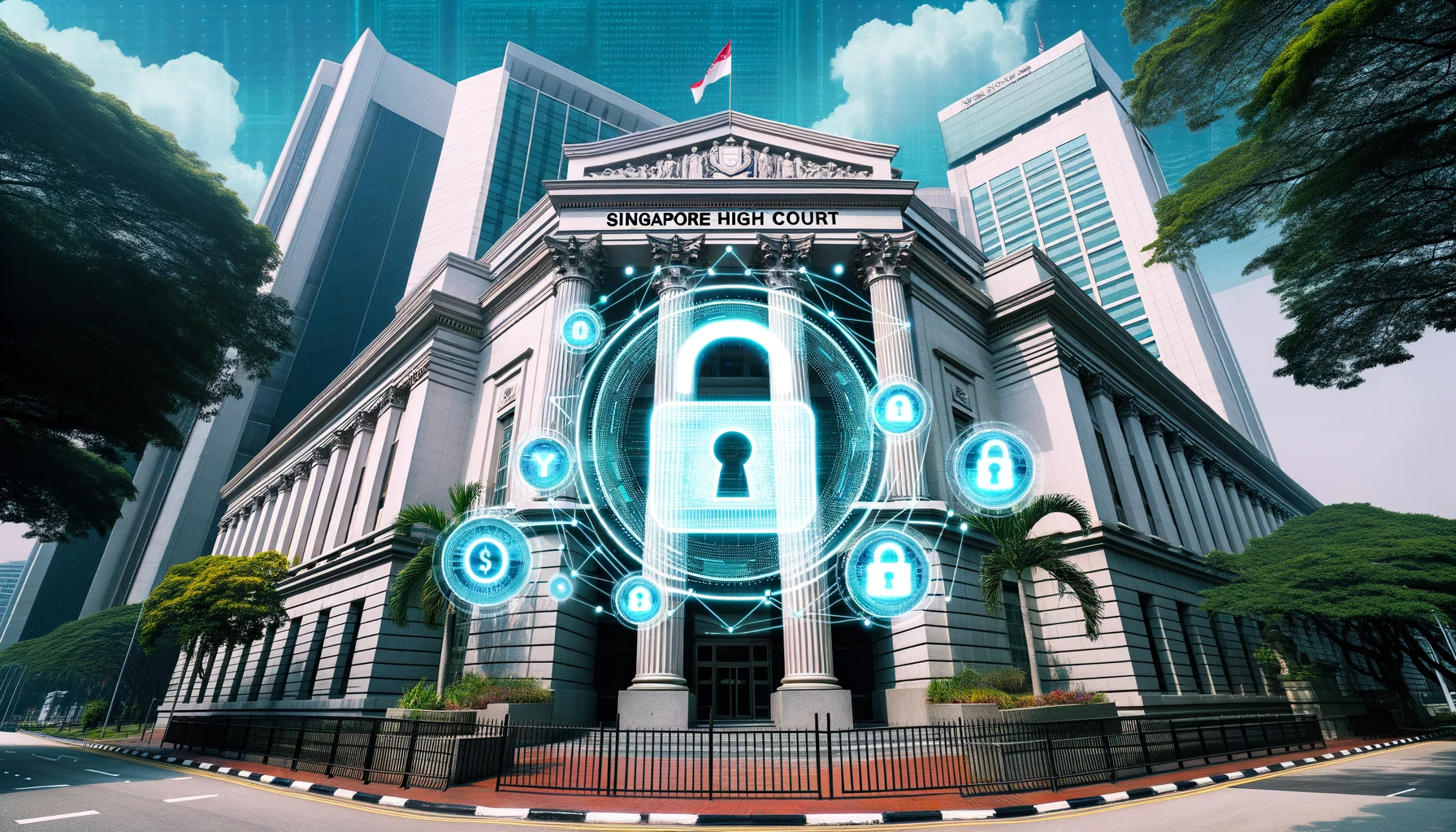
In a landmark ruling, the Singapore High Court has set a new precedent by allowing financial investigation firm Intelligent Sanctuary (iSanctuary) to attach nonfungible tokens (NFTs) containing legal documents to cold wallets linked to cybercrimes.
The Case at Hand
The case emerged when a businessperson lost a staggering $3 million in cryptocurrency assets. iSanctuary was hired to investigate and successfully traced the stolen funds to a series of cold wallets. The firm presented both on-chain and off-chain evidence to the Singapore High Court, earning a groundbreaking worldwide injunction, the first of its kind issued by the court.
The Role of NFTs
The court-sanctioned worldwide freeze order was tokenized into what are called “soulbound NFTs” and attached to the implicated wallets. Created by Mintology, an app by Singaporean NFT studio Mintable, these NFTs serve a critical function. Although they do not prevent transactions from the flagged wallets, they act as a cautionary tag for exchanges and other counterparties that these wallets were involved in illicit activities. Additionally, iSanctuary claims that the NFTs also provide a mechanism to track any funds leaving these wallets.
A Global Undertaking
The case has far-reaching implications and covers multiple jurisdictions, from Singapore to Spain, Ireland, Britain, and other European countries. Singapore-based crypto exchanges were also implicated for allegedly laundering the stolen funds, which were pilfered due to a compromised private key.
A Game-Changing Mechanism
Jonathan Benton, the founder of iSanctuary, hailed the court’s decision as revolutionary. “This is a game changer; it can happen in hours if needed. We can serve on wallets and start to police the blockchain, identify those holding illicit assets, serve civil or criminal orders, even red flags,” he stated.
NFTs in Legal Systems
This isn’t the first instance where NFTs have been utilized for legal purposes. They have been previously used to deliver court summonses in Italy and the United States. However, the Singapore High Court’s ruling adds a new dimension to the utility of NFTs, especially in the realm of financial crimes and asset recovery.
A Warning Shot for Fraudsters
As cryptocurrencies become more mainstream, so do the associated risks and crimes. This ruling sends a strong message to would-be fraudsters that blockchain transactions are not as anonymous as they might think. With the advent of soulbound NFTs, legal authorities now have a new tool at their disposal to deter financial crimes and bring criminals to justice.
Conclusion
The ruling by the Singapore High Court has opened a new chapter in the integration of blockchain technology into the legal system. It serves as a compelling example of how NFTs can be employed for purposes far beyond art and collectibles, effectively becoming a part of legal procedures and crime prevention.
CEAN News | Join 24/7 News Telegram