
CEAN News | Business News

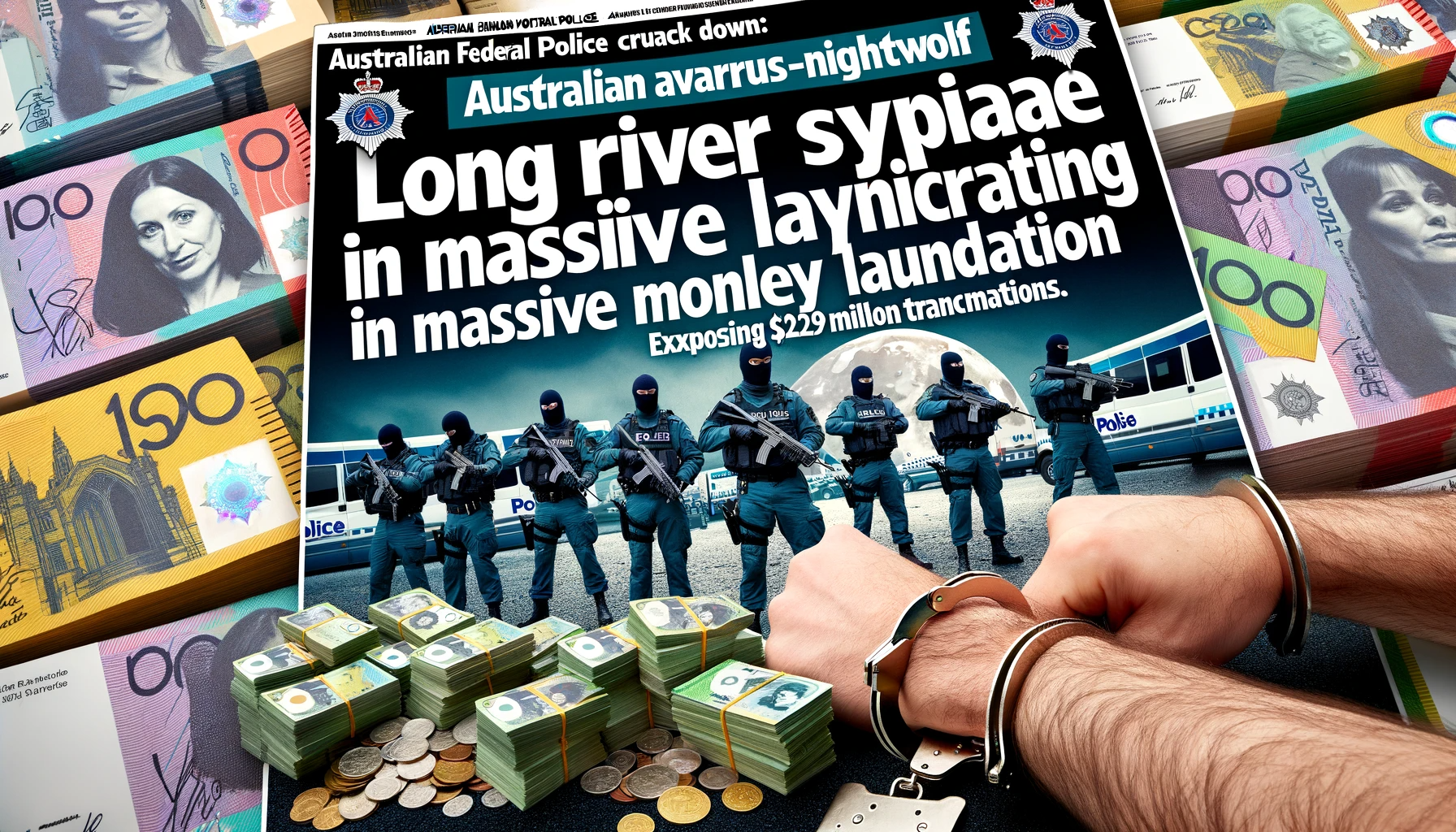
In a groundbreaking revelation, the Australian Federal Police (AFP) has exposed a major money laundering syndicate operating under the guise of currency exchange. Named the Long River syndicate, the group is suspected to have laundered around $229 million through the Changjiang Currency Exchange over the past three years.
Operation Avarus-Nightwolf: A Deep Dive
As a part of Operation Avarus-Nightwolf, the AFP carried out targeted raids that led to the seizure of high-end properties and luxury vehicles worth an estimated $50 million. The operation spanned across three years, during which approximately $229 million was laundered through twelve different establishments across Australia.
Arrests and Charges
The AFP’s in-depth investigation culminated in the arrest of seven individuals—four Chinese nationals and three Australians—in the eastern suburbs of Melbourne. All those arrested have been charged with being involved in the illicit syndicate and are set to face the Melbourne Magistrates Court in the coming days.
The AFP’s Scrutiny on Changjiang Currency Exchange
Assistant Commissioner Stephen Dametto elaborated that the significant expansion of the Changjiang Currency Exchange during the COVID-19 lockdowns raised red flags. This was especially suspicious given the decline in the number of international students and tourists during that period. In-depth investigation by the AFP revealed alleged connections between the currency exchange service and well-known money laundering groups.
“Over the past three years, the exchange chain reportedly transferred over $10 billion. Our investigations suggest that the company has been facilitating unlawful money transfers for organized criminals,” said Dametto.
The Intricate Web of Money Laundering
The syndicate is suspected to have laundered a total of $228,883,561 between 2020 and 2023. The AFP believes that some of these funds could be linked to cyber-enabled scams, illicit goods trafficking, and violent crimes. To camouflage their illegal activities, the syndicate reportedly fabricated business records. This included the creation of forged invoices and falsified bank statements, making it appear as if the funds originated from legitimate sources.
The Lavish Lifestyle of the Syndicate Members
Members of the Long River syndicate lived lives of unabashed luxury. They were known to frequent high-end restaurants, indulge in expensive wines and sake, travel by private jets, and drive luxury vehicles. Their homes were multi-million-dollar properties. In a cunning move to evade detection, they are also alleged to have acquired counterfeit passports at a staggering cost of $200,000 each.
Conclusion
The AFP’s unraveling of the Long River syndicate serves as a stark reminder of the sophisticated methods employed by criminal organizations to launder money. It also highlights the importance of stringent oversight and regulation of financial establishments, particularly in these challenging times when illegal activities can easily be masked by the upheaval caused by global events like the COVID-19 pandemic.