
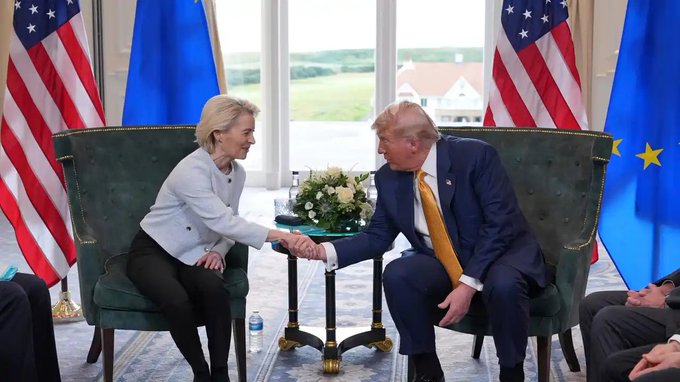
European leaders have expressed mixed reactions to the newly announced U.S.-EU trade agreement, which sets tariffs at 15% for European goods while exempting U.S. exports from tariffs altogether. The deal marks a significant shift in transatlantic economic relations and is expected to reshape the trading landscape between the two regions.
Several European policymakers voiced concern over the imbalance created by the tariff structure. “The 15% tariff on our exports could hinder European businesses’ competitiveness in the U.S. market,” said a senior EU trade official. Nonetheless, the agreement includes commitments for Europe to invest $600 billion in the United States, along with plans to purchase energy worth $750 billion and U.S. weapons valued in the hundreds of billions. These investments are seen as an effort to deepen economic ties and promote strategic cooperation.
U.S. officials have emphasized the deal’s benefits in fostering economic growth and strengthening security alliances. “This agreement reflects our shared commitment to economic resilience and security cooperation,” said a U.S. trade representative. However, some European leaders have called for ongoing negotiations to address concerns about tariff impacts and ensure a more balanced and equitable trade relationship moving forward.
As both sides prepare to implement the agreement, industries and policymakers on both sides are closely monitoring its long-term implications. Experts warn that while the deal may boost certain sectors, the tariff disparity could strain transatlantic economic relations if not managed carefully.