
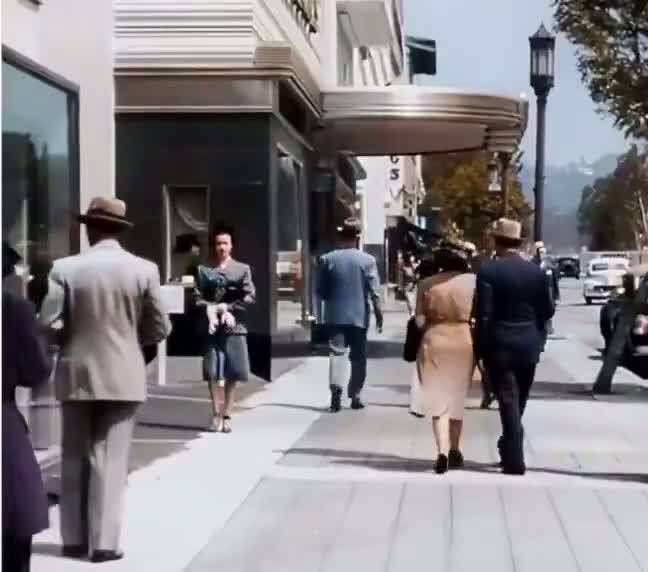
**Downtown Los Angeles 80 Years Ago: A Glimpse into the 1940s Urban Heart**
Eighty years ago, downtown Los Angeles was a bustling center of commerce and culture, reflecting the growth and transformation of the city in the early 20th century. In the 1940s, the area boasted a skyline dotted with grand theaters, historic hotels, and towering office buildings that showcased the city’s economic vitality. The streets were alive with the automobiles, streetcars, and pedestrians that defined the urban landscape during this vibrant period.
During this era, downtown LA was a hub for entertainment and social activity. Iconic theaters such as the Warner Grand and the Rialto Theatre drew crowds for Hollywood premieres and movie showings. The historic Hotel Alexandria and other landmarks symbolized the city’s burgeoning tourism industry, while bustling markets and stores lined Broadway and Spring Street, reflecting a thriving retail district. The development of civic institutions and new infrastructure further strengthened the area’s importance as the city’s central nerve.
However, the 1940s also marked the beginning of significant changes. The wartime economy stimulated construction and industrial growth, leading to increased employment but also contributing to urban density and congestion. Post-war developments would soon reshape downtown Los Angeles, introducing modern architecture and shifting the commercial focus outward, yet the foundations laid in this era continue to influence the city’s skyline and neighborhood identity today.
Looking back 80 years, downtown Los Angeles emerges as a vibrant and pivotal area, shaped by economic ambition and cultural dynamism. Its rich history during the 1940s offers a window into the city’s resilience and evolution, setting the stage for the metropolis it remains today.