
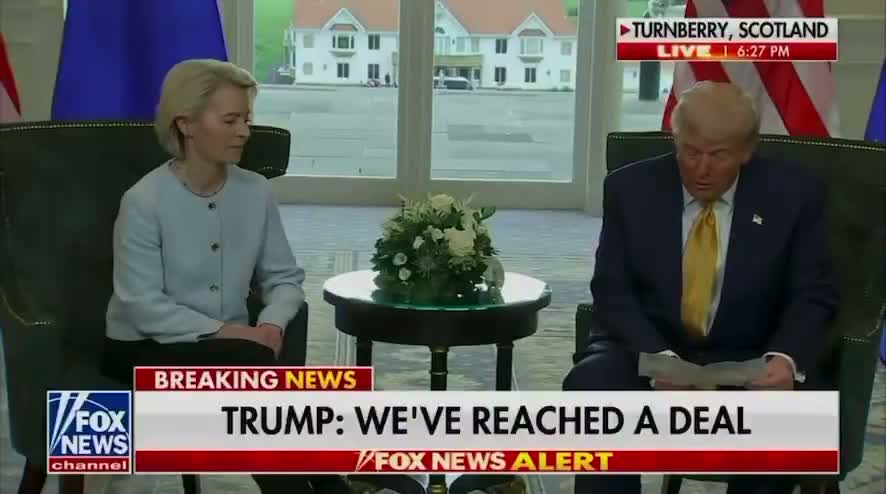
In a significant development, former U.S. President Donald Trump and European Commission President Ursula von der Leyen announced the conclusion of a new tariff agreement aimed at strengthening transatlantic trade relations. The deal stipulates a 15% tariff on European Union goods entering the United States, while U.S. exports to Europe will face zero tariffs, marking a notable shift toward freer trade between the two economies.
As part of the agreement, Europe committed to invest $600 billion in the United States over the coming years, signaling a substantial economic partnership. Additionally, the EU has agreed to purchase energy resources valued at $750 billion from the U.S., reflecting a deepening cooperation in the energy sector. Europe also expressed intentions to significantly increase its purchases of American-made weapons, with agreements amounting to hundreds of billions of dollars, potentially boosting U.S. defense exports.
Analysts see this deal as a pivotal move to bolster economic ties post-pandemic and amidst ongoing geopolitical tensions. It could also serve as a strategic counterbalance against rising economic influence from other global powers. While the agreement aims to create new opportunities for businesses on both sides, critics may scrutinize its long-term economic and political implications.
The announcement signals a renewed focus on transatlantic cooperation, with both sides emphasizing shared interests in trade, security, and energy. Details of the deal will likely undergo further negotiations and assessments before full implementation, but it marks a noteworthy milestone in U.S.-EU relations.