
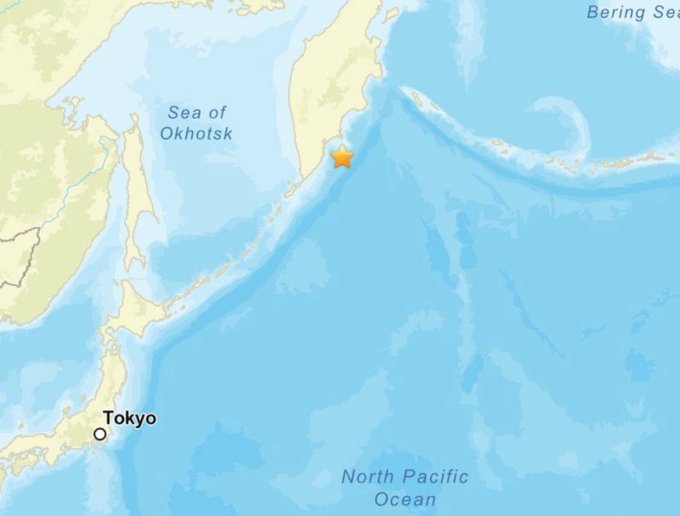
The United States Geological Survey (USGS) has revised the magnitude of the recent earthquake in Kamchatka from 8.7 to an even more powerful 8.8, marking it as one of the most significant seismic events in recorded history. The correction comes after further data analysis, confirming the quake’s extraordinary strength and its potential for widespread impact.
This seismic event, the sixth-strongest ever recorded globally, struck the remote Russian peninsula late last week, triggering tsunami warnings and causing concern among local populations and authorities. Despite its strength, initial reports indicate that due to the earthquake’s location in a sparsely populated region, human casualties have been minimal, though some structural damage has been reported.
Experts say the magnitude upgrade underscores the importance of ongoing seismic monitoring and preparedness in regions prone to such massive quakes. The USGS and international seismological agencies continue to analyze data from the event to better understand its characteristics and potential aftershocks. Authorities are urging residents in nearby coastal areas to remain vigilant as tsunami forecasts are closely monitored.
While Kamchatka’s rugged landscape often suffers from seismic activity, this latest event serves as a stark reminder of the region’s vulnerability to powerful natural forces. Researchers are now studying the quake to assess its implications for future seismic risk assessments and disaster preparedness strategies nationwide.