
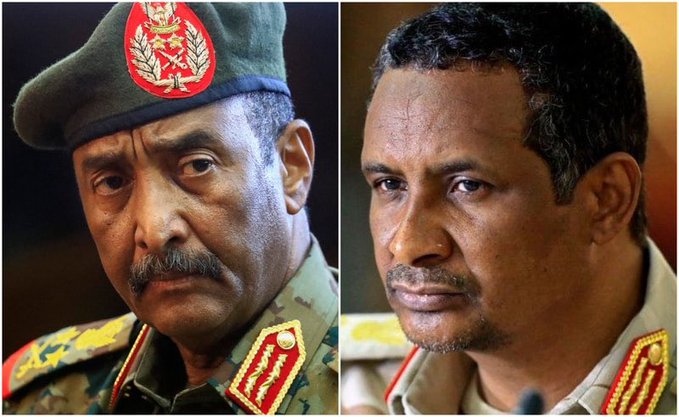
Sudan’s ongoing conflict centers around the powerful figures vying for control of the country, with General Abdel Fattah al-Burhan at the forefront. As the de facto ruler of Sudan and leader of the Sudanese Armed Forces (SAF), al-Burhan has been a central figure in the country’s political landscape since the overthrow of former President Omar al-Bashir in 2019. His leadership now faces a critical test amid escalating violence and instability.
The primary rival to al-Burhan’s authority is Mohamed Hamdan Dagalo, commonly known as Hemedti, who commands the Sudanese Rapid Support Forces (RSF). The RSF, originally formed from militias involved in the Darfur conflict, has grown into a powerful paramilitary organization. Hemedti’s forces have increasingly challenged the military leadership, leading to a fierce power struggle that has plunged Sudan into chaos.
Recent weeks have seen intense clashes between the SAF and RSF across strategic locations, resulting in significant casualties and widespread displacement. The confrontation reflects deeper divisions over the future direction of Sudan, with each faction vying to assert dominance. International efforts to broker peace have so far struggled to halt the violence, underscoring the complex and deeply rooted nature of the conflict.
As the fight for control continues, the stability of Sudan remains uncertain. The actions of al-Burhan and Hemedti will likely determine the country’s trajectory in the coming months, with civilians bearing the brunt of ongoing violence and instability. The international community remains hopeful for a peaceful resolution, but the path forward remains unclear amidst the ongoing power struggle.