
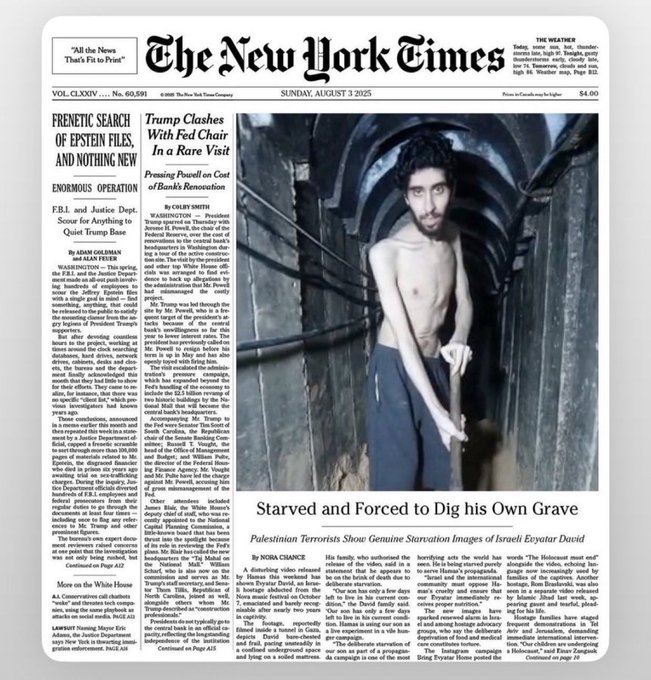
In a surprising turn, Hamas has released a disturbing video depicting Israeli hostage Evyatar David being subjected to starvation, a stark example of psychological warfare and torture. The footage, which has circulated widely on social media, presents a grim portrayal of the ongoing conflict and raises serious concerns about the treatment of hostages in the region.
Despite the gravity of the material, mainstream outlets such as The New York Times have refrained from featuring the images, citing editorial standards and the potential impact of such graphic content. In response, online communities and activists have begun creating altered versions of the footage, with some photoshopping images onto prominent news pages to draw attention to the issue.
This phenomenon underscores a broader tension between media censorship and the demand for transparency amid complex conflicts. As traditional outlets hold back from publishing certain images, social media users are increasingly taking it upon themselves to distribute and amplify these messages, sometimes risking legal or ethical repercussions. Experts warn that such unfiltered dissemination could influence public perception and diplomatic responses.
The situation remains volatile, with international calls for humanitarian considerations and the release of hostages intensifying. As the conflict continues to evolve, the balance between responsible journalism and the need for urgent awareness remains a contentious point in the global discourse.