
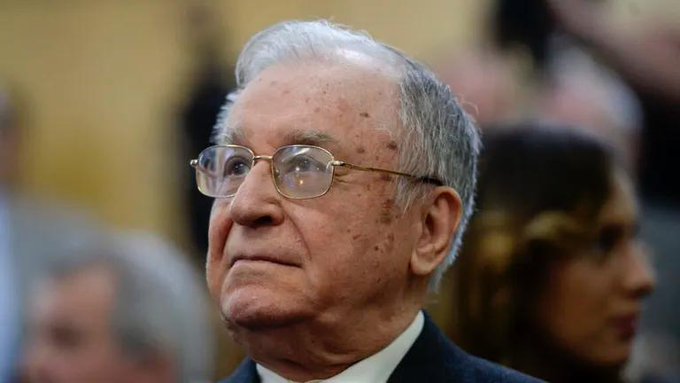
Former Romanian President Ion Iliescu has passed away at the age of 95, marking the end of a significant chapter in Romania’s modern history. Iliescu, a pivotal figure during Romania’s transition from communism, led the country through a turbulent period following the fall of dictator Nicolae Ceaușescu.
In 1989, amid widespread protests and upheaval, Iliescu emerged as the leader of the National Salvation Front, the organization that assumed control after Ceaușescu’s regime was toppled. His leadership during this transitional phase was instrumental in stabilizing Romania, though it also drew criticism for the handling of post-revolution events. Iliescu subsequently served as Romania’s president twice—first from 1990 to 1996 and again from 2000 to 2004—becoming a dominant political figure in the post-Communist era.
Throughout his political career, Iliescu remained a controversial yet influential personality. Supporters praised him for guiding Romania toward democratic reforms and integration into Europe, while critics accused him of entrenching old regime practices. His death marks the loss of a leader who played a central role in shaping the nation’s modern identity amidst its complex political evolution.
Romania and political observers worldwide have expressed condolences, acknowledging Iliescu’s impact on the country’s history. As the nation reflects on his legacy, his contributions to Romania’s transition to democracy will be remembered as both pivotal and contentious.