
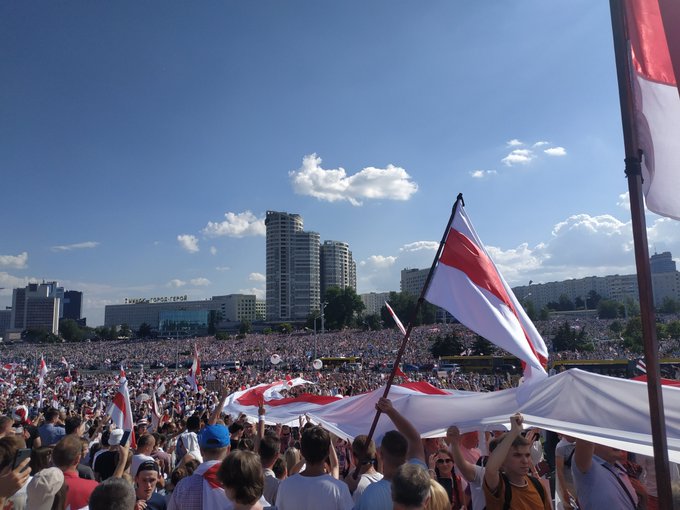
Five years after Belarus’s contested 2020 presidential election, the nation remains mired in political turmoil, with hopes for democratic reform still unfulfilled. On August 9, 2020, hundreds of thousands of Belarusians took to the streets in unprecedented numbers to protest the alleged rigging of the presidential vote, which handed incumbent Alexander Lukashenko a sixth term. The protests marked the beginning of the country’s largest and most sustained uprising, as citizens demanded free elections and an end to decades of authoritarian rule.
The government’s response was swift and brutal, with security forces launching mass arrests, violence, and suppression campaigns aimed at quelling dissent. Despite these efforts, the movement persisted, drawing support from diverse segments of society and gaining international attention. Prominent opposition leaders went into exile, and many activists faced harsh imprisonment or exile, but the calls for change remained alive in the hearts of many Belarusians.
Over the past five years, the political landscape in Belarus has seen little change, with Lukashenko consolidating power amid ongoing repression. International bodies and Western nations have condemned the crackdown, but effective pressure for democratic reforms remains elusive. The anniversary highlights a nation still divided, with hopes for freedom gradually fading into what many describe as a road to nowhere, leaving Belarusians to navigate an uncertain future.