
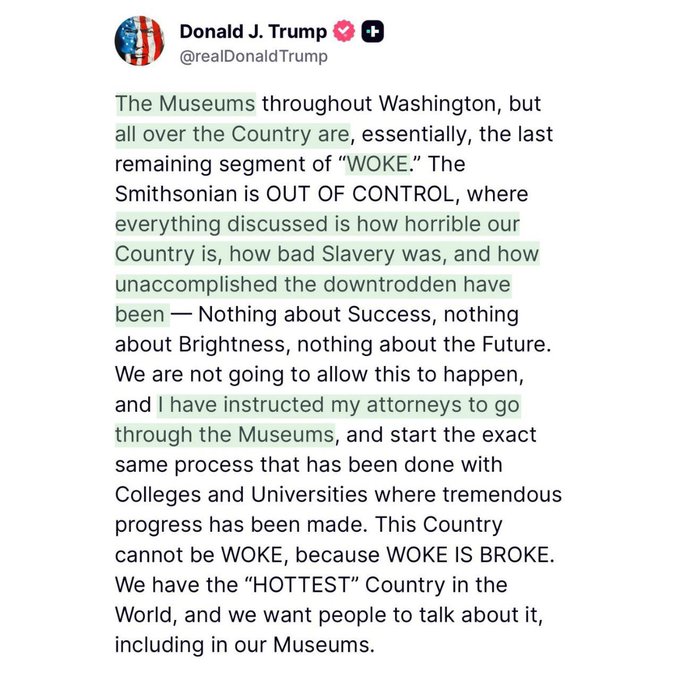
Former President Donald Trump has expressed concerns about the current direction of American museums, particularly targeting what he describes as a “woke” ideology. In recent remarks, Trump criticized institutions like the Smithsonian, claiming they are increasingly focused on negative portrayals of American history, such as slavery and systemic oppression, rather than celebrating the nation’s successes and accomplishments.
Trump’s critique centers on the perception that museums under this influence are emphasizing narratives that depict the United States in a predominantly negative light. He argued that this approach neglects the positive aspects of American history and achievements, suggesting it fosters a biased or one-sided view of the country’s past. Such comments align with broader political debates over how American history is presented and interpreted in public education and cultural institutions.
The remarks come amid ongoing discussions about the direction and content of U.S. museums and educational materials, which have become a focal point for cultural and political disagreements. Critics of Trump’s stance warn that avoiding difficult truths about America’s past could diminish the opportunity for honest national dialogue, while supporters argue for a revision of historical narratives to be more inclusive and balanced. As the debate continues, the question of how to portray American history in museums remains a contentious issue across the political spectrum.