
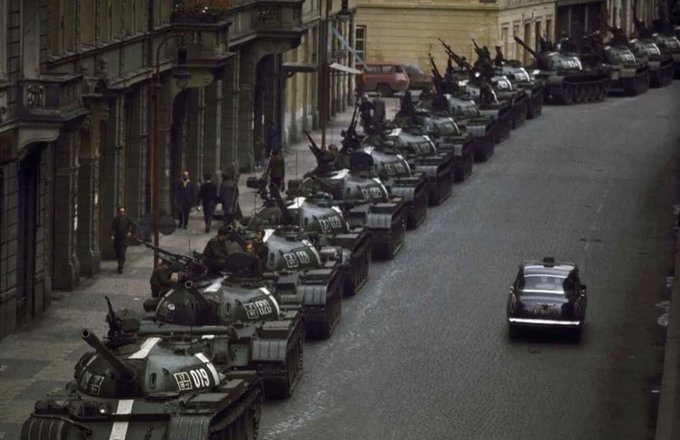
Today marks the 57th anniversary of the Soviet-led invasion that ended the Prague Spring in Czechoslovakia. On the night of August 20-21, 1968, Soviet forces, under the orders of then-Leader Leonid Brezhnev, launched a large-scale military intervention into Czechoslovakia. An estimated 250,000 soldiers and approximately 2,000 tanks crossed the country’s borders, signaling the end of efforts at political liberalization and reform.
The Prague Spring was a period of political loosening and reform within the socialist state, sparked by Czechoslovakia’s leader Alexander Dubček. The movement aimed to create “socialism with a human face,” but it alarmed neighboring Soviet states. In response, the Soviet Union and other Warsaw Pact countries justified the invasion as necessary to maintain “socialist unity” and prevent what they saw as a threat to Eastern Bloc stability.
The invasion was met with widespread protests and resistance, both within Czechoslovakia and by international observers, though the military operation quickly reasserted Soviet dominance. The action silenced reformist calls for change for several years but also drew criticism from the global community and contributed to increased tensions during the Cold War era.
Today, the anniversary serves as a reminder of the invasion’s impact on Czechoslovakia’s history and the broader struggle for political freedoms in Eastern Europe. It remains a significant event illustrating the lengths to which the Soviet Union would go to maintain control over its satellite states during the Cold War period.