
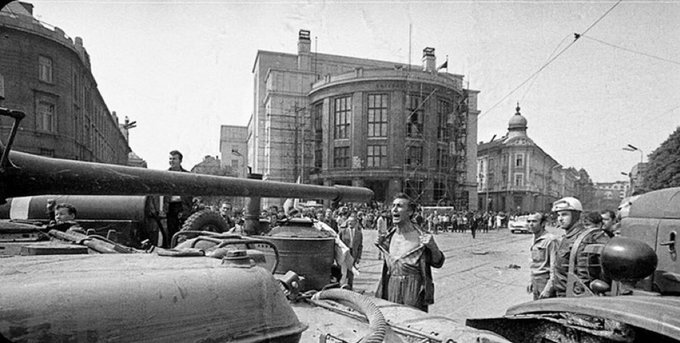
On August 21, 1968, the Prague Spring, a period of political liberalization in Czechoslovakia, came to an abrupt end as Soviet-led Warsaw Pact troops invaded the country. The invasion was prompted by concerns among Soviet leaders and other Warsaw Pact members that the reforms undertaken by Czechoslovak leader Alexander Dubček threatened the stability of the communist bloc. The military intervention involved tanks and thousands of troops pouring into Prague, effectively crushing the reform movement.
The Prague Spring, which began in January 1968, had seen widespread calls for greater political freedoms, decentralization of power, and reforms within the socialist state. The movement gained substantial popular support but ultimately faced harsh resistance from Soviet authorities and their allies. The invasion swiftly reinstalled a hardline communist government under Gustáv Husák, who reversed many of the reforms introduced during the Spring.
International reaction to the invasion was mixed, with condemnation from Western nations and protests around the world. The event marked a significant setback for reformist efforts within the Eastern Bloc and reinforced Soviet dominance over its satellite states during the Cold War era. Despite this, the ideals of the Prague Spring continued to inspire dissident movements and calls for reform within Czechoslovakia until the eventual fall of communism in the region decades later.