
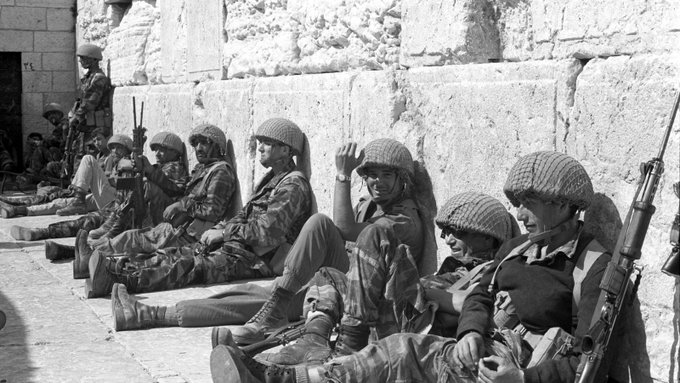
In 1967, during the Six-Day War, Israel captured two significant territories: Gaza from Egypt and the West Bank from Jordan. This conflict, which lasted from June 5 to June 10, 1967, resulted in Israel asserting control over several neighboring regions, significantly altering the geopolitical landscape of the Middle East.
The capture of Gaza and the West Bank marked the beginning of Israeli administrative presence in these areas, which has remained a central issue in ongoing regional disputes and negotiations. The conflict’s aftermath led to increased tensions and set the stage for decades of complex political developments concerning territorial sovereignty and security concerns.
A recent photograph from August 20 shows Israeli troops in Jerusalem, reflecting ongoing military and political activity in the region. The city remains a focal point of Israeli and Palestinian interests, with historical and religious significance adding to its central role in the conflict.
Overall, the 1967 territories’ occupation continues to influence regional dynamics, shaping diplomatic efforts and peace initiatives between Israel and its neighbors. The historical events of that year continue to resonate today, underscoring the lasting impact of the Six-Day War on Middle Eastern geopolitics.