
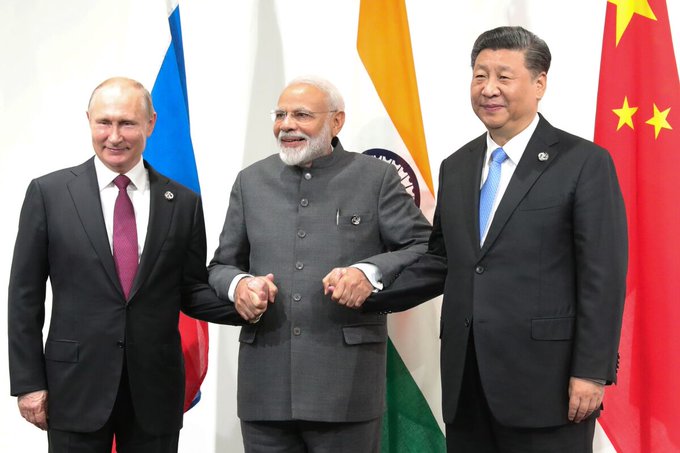
Recent developments indicate that President Donald Trump’s trade policies are influencing international relations, particularly among Russia, India, and China. As the United States implements tariffs and trade restrictions, these nations are increasingly seeking closer economic engagement to counterbalance potential disruptions. This shift suggests a realignment of regional trade partnerships, with Moscow, New Delhi, and Beijing exploring new avenues for cooperation amid the changing global trade landscape.
However, despite the growing economic ties, underlying trust issues persist among these countries. Diplomatic and strategic concerns remain, with mutual skepticism impacting the depth and sustainability of their cooperation. Experts highlight that although economic incentives are driving closer collaboration, geopolitical tensions and historical mistrust continue to pose significant barriers.
Analysts note that the evolving dynamics reflect broader shifts in international diplomacy and economic strategy. While the trade war has accelerated certain alliances, it has also underscored the complex interplay of economic interests and geopolitical caution. The future of Russia, India, and China’s relationship will likely depend on how these nations navigate their economic proximities alongside longstanding strategic considerations.
Overall, the ongoing trade tensions involving the U.S. are reshaping regional alignments, pushing these large economies toward closer ties, but underlying trust issues highlight the fragility of any potential alliance. As the global trade environment remains uncertain, observers will be watching how these relationships develop and whether deeper cooperation can overcome persistent strategic mistrust.