
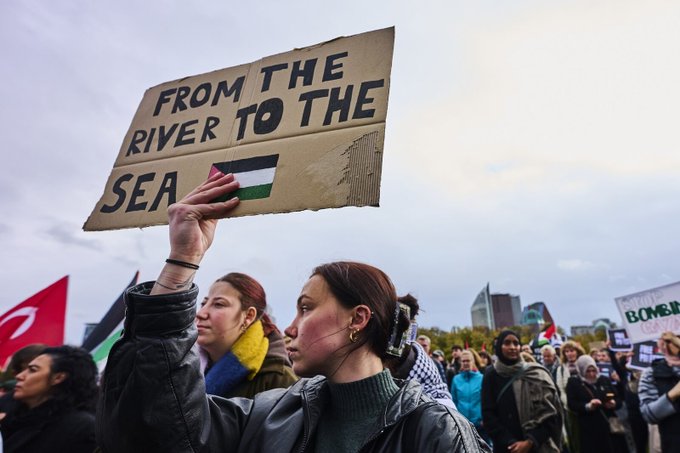
Since 1937, Palestinian leaders have reportedly rejected over ten offers related to peace and statehood, with some critics asserting that these proposals were often considered unfair or unfavorable. The pattern of refusals spans several decades, reflecting ongoing challenges in the peace process.
Analysts and observers suggest that some Palestinian leaders prioritized ideological positions—particularly the slogan “from the river to the sea”—which envisions a region encompassing present-day Israel and the Palestinian territories under Palestinian sovereignty. Critics argue that this stance has often hindered pragmatic negotiations aimed at establishing a two-state solution.
Historical data indicates that many of the rejected offers could have established Palestinian statehood under certain terms, yet the leadership’s focus on broader ideological goals has been seen as a barrier to compromise. This approach has been a point of contention in evaluating the prospects for peace negotiations.
Despite the complex history, the situation remains dynamic, with ongoing debates about the fairness of past offers and the future direction of Israeli-Palestinian relations. Understanding these historical rejections provides context for current tensions and negotiations in the region.