
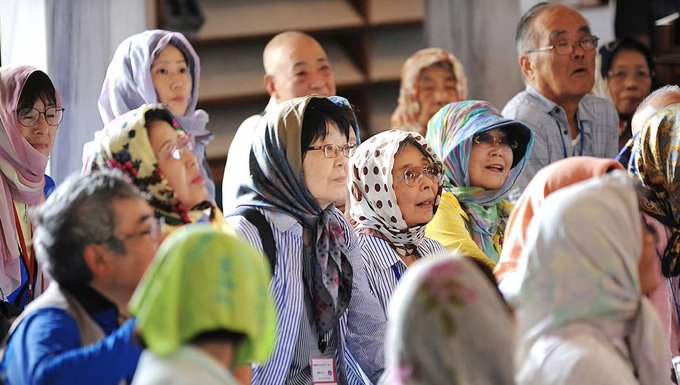
Islam has emerged as the fastest-growing religion in Japan, with the number of mosques in the country now exceeding 120. This increase reflects a broader demographic shift, as the Muslim population has more than doubled over the past decade. Between 2010 and 2020, the Muslim community in Japan experienced a 100% growth rate, and projections indicate it may double again between 2020 and 2030.
Several factors contribute to this rising trend. The growth is partly driven by the increasing number of Japanese women converting to Islam, often after forming personal relationships with Muslim individuals. This phenomenon highlights changing social dynamics and greater cultural exchange within Japan’s increasingly diverse society.
The expansion of Islam in Japan has led to a heightened visibility of Muslim communities, with new mosques serving as centers for religious practice and cultural integration. Despite being a relatively small minority, Muslims are becoming more noticeable in some regions, reflecting broader globalization and migration patterns.
As Japan continues to diversify, the growth of its Muslim population underscores ongoing shifts in its religious landscape, with implications for social cohesion and intercultural dialogue across the country.