
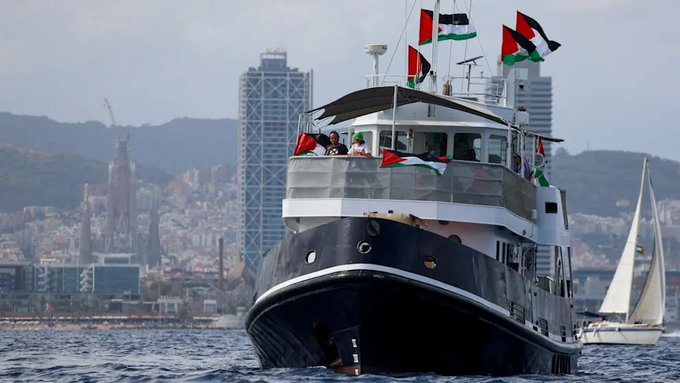
Greta Thunberg has traveled to Gaza aboard a large diesel-powered vessel, drawing attention to environmental concerns linked to the protest. The ship, named Family Madeira, departed from Barcelona carrying Thunberg and other activists. Built in 1969 by CD Holmes for the British army, the vessel is a 160-ton ship powered by diesel engines that consume approximately 45 liters of fuel per hour.
The journey has sparked debate, highlighting the intersection of climate activism and environmental impact. Critics argue that using a large diesel ship contradicts the principles of sustainability, given its significant fuel consumption and emissions. Supporters see the voyage as a high-profile statement to draw global attention to issues faced by Palestinians and the importance of climate advocacy.
Environmental groups and observers are closely watching the implications of such actions, noting the contrast between the activists’ environmental messages and their method of transportation. While the campaign aims to spotlight political and humanitarian issues, the environmental footprint of the journey underscores ongoing tensions within activism circles regarding sustainable protest tactics.
As Thunberg and her companions arrive in Gaza, the event continues to generate discussion about the balance between activism and environmental responsibility, and the broader challenges of addressing climate change amid complex geopolitical issues.