
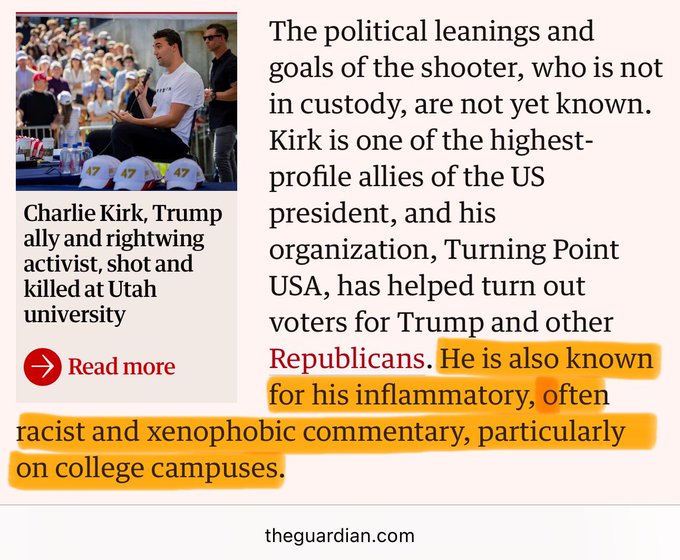
The Guardian has faced criticism for its coverage of Charlie Kirk, a prominent conservative commentator, following his death. Reports indicate that the publication continued to categorize Kirk with allegations of racism and xenophobia, despite his passing. Critics argue that this approach overlooks the loss felt by many and focuses solely on his controversial views.
There has been no public statement of condolence from The Guardian regarding Kirk’s death. Instead, the coverage appears to emphasize his political stances and the criticisms associated with them. This has sparked debate over journalistic neutrality and the appropriateness of commentary in the immediate aftermath of a person’s death.
The incident has highlighted broader discussions about media coverage of public figures, especially those with polarized reputations. Advocates for balanced reporting emphasize the importance of separating personal viewpoints from the circumstances of a person’s death. Meanwhile, others see this as an example of partisan bias influencing mainstream journalism.
As reactions continue to unfold, the case underscores ongoing tensions between the dissemination of critical opinion and respect for individuals in the public eye. The lack of acknowledgment or condolence from the publication marks a notable aspect of the ongoing conversation about media ethics and the portrayal of controversial figures.