
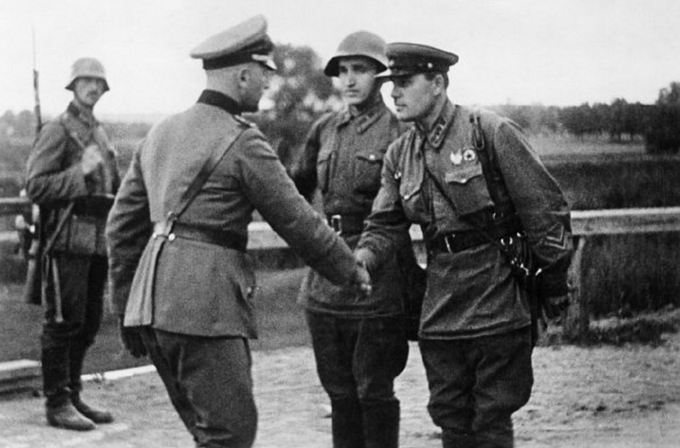
On August 23, 1939, exactly 86 years ago, the Soviet Union launched an invasion of eastern Poland, marking a significant escalation in the early stages of World War II. This invasion came just two weeks after Nazi Germany had initiated its own attack from the west, effectively dividing Poland between the two powers. The coordination of these invasions was made possible through the secret protocol of the Molotov-Ribbentrop Pact, a non-aggression treaty signed between Germany and the Soviet Union.
The Molotov-Ribbentrop Pact, signed on August 23, 1939, included a secret annex that outlined the spheres of influence each country would control in Eastern Europe. According to the agreement, Germany was to occupy the western part of Poland, while the Soviet Union would proceed to take control of the eastern regions. This division led to the swift and brutal annexation of Polish territory, resulting in widespread upheaval and the suffering of Polish civilians.
The invasion of Poland by the Soviet forces was part of a broader strategy to expand Soviet influence in Eastern Europe. It also marked the beginning of a brutal occupation that would last until 1941, when Nazi Germany launched Operation Barbarossa, invading the Soviet Union. The pact and the subsequent invasions are widely regarded as key moments that contributed to the onset of global conflict, highlighting the complex and often clandestine diplomacy that shaped the early years of World War II.