
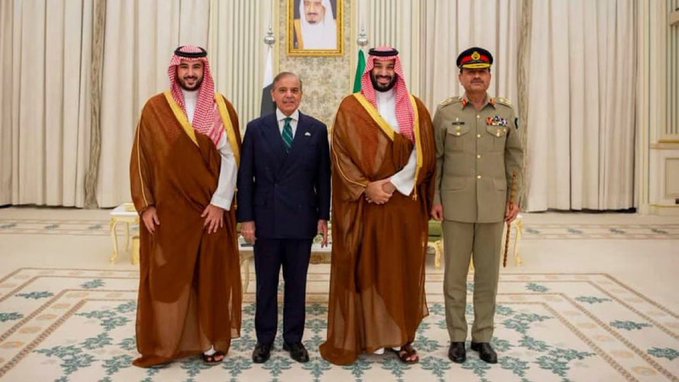
Pakistani Defense Minister Khawaja Asif announced that Pakistan’s nuclear capabilities will be available to support Saudi Arabia’s defense, in accordance with the recently signed Pakistan-Saudi Arabia mutual defense treaty. The agreement, finalized two days prior, marks a significant development in the evolving strategic relationship between the two countries.
According to Asif, the treaty includes provisions for Pakistan to extend military and strategic support to Saudi Arabia, including its nuclear capabilities. The announcement has drawn attention to the deepening cooperation between Islamabad and Riyadh amid regional security concerns. Pakistan’s nuclear arsenal is generally regarded as a critical aspect of its national security strategy, and its potential role in regional alliances could influence broader geopolitical dynamics.
The details surrounding the treaty, including its scope and specific commitments, have not been fully disclosed. Analysts note that this move may signal strengthening diplomatic and military ties, but it also raises questions about regional stability and non-proliferation concerns. Both governments have emphasized their focus on advancing mutual interests and enhancing security cooperation.
As the international community observes the developments, experts highlight the importance of transparent communications to manage regional perceptions. The treaty signifies a notable shift in Pakistan’s foreign and defense policies, underscoring the importance of strategic partnerships in the Middle East and South Asia.