
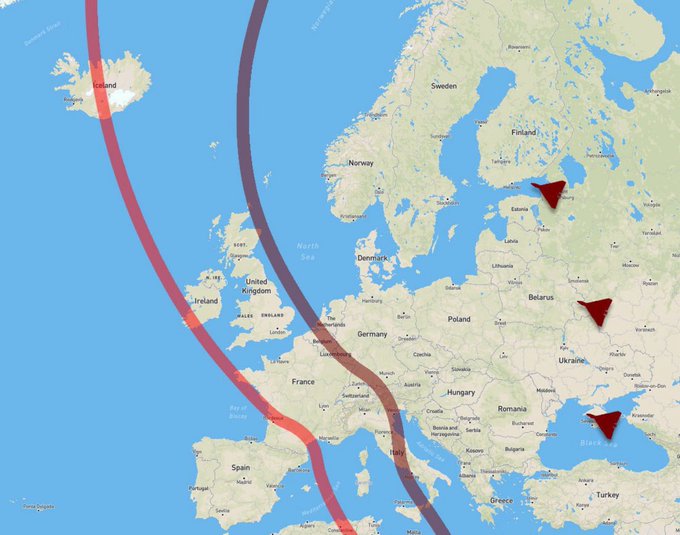
Western European countries are reassessing their security measures following recent drone attacks attributed to Russia against Poland, Romania, and Baltic states. These incidents have heightened concerns about the increasing capabilities of Russian unmanned aerial vehicles (UAVs) and their potential to reach farther into Europe.
One drone, the Geran 2, has an estimated operational range of 1,800 to 2,500 kilometers, raising questions about its ability to extend attacks or reconnaissance missions into Western Europe, including Germany. This development marks a significant shift in regional security considerations, prompting allies to evaluate threat levels and defense preparedness.
Experts note that while the Geran 2’s range theoretically allows access to parts of Germany, actual deployment depends on various factors such as launch points, flight paths, and operational targets. Western nations are therefore stepping up intelligence-sharing and defensive measures to mitigate potential risks posed by these UAVs.
In response, NATO and European governments are monitoring the situation closely, emphasizing the importance of coordinated defense strategies. The ongoing developments underscore the evolving nature of regional security challenges linked to drone technology and military tactics in the current geopolitical climate.