
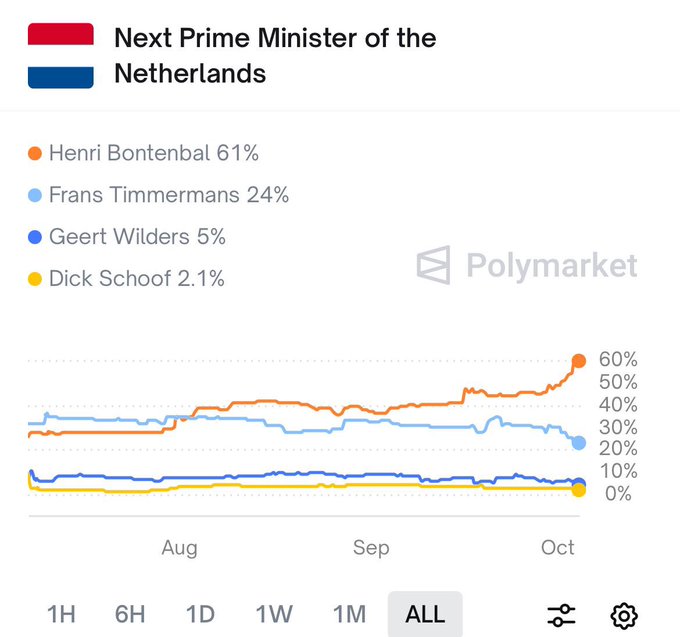
Geert Wilders, a prominent Dutch politician and leader of the far-right Party for Freedom (PVV), remains a significant figure in the Netherlands’ political landscape following his party’s victory in the 2023 parliamentary elections. The PVV secured a substantial number of seats, positioning Wilders as a key player in the upcoming coalition negotiations. His platform is heavily focused on stringent immigration policies, including calls for an outright halt to immigration and the closure of migrant reception centers.
Despite these electoral gains, it is unlikely that Wilders will become the next Dutch prime minister. The PVV’s platform has historically been contentious, and the party has not yet demonstrated the ability to form a governing coalition on its own. Dutch political tradition relies on coalition governments, often with multiple parties sharing power, which complicates Wilders’ path to the premiership, especially given the Netherlands’ political landscape and the potential for opposition from other parties.
The emphasis on anti-immigrant policies has sparked debate within the country and internationally, with supporters praising Wilders’ stance on national security and cultural integration, while critics warn of the divisive and exclusionary implications of such policies. The next steps in Dutch politics will involve coalition negotiations, as other parties assess how to address the electoral results and form a government capable of commanding parliamentary majority.
As the political process unfolds, the Netherlands faces ongoing discussions about migration, national identity, and the balance between security and openness. Wilders’ electoral success underscores the shifting voter sentiments on these issues, although a government led by him remains unlikely in the near future.