
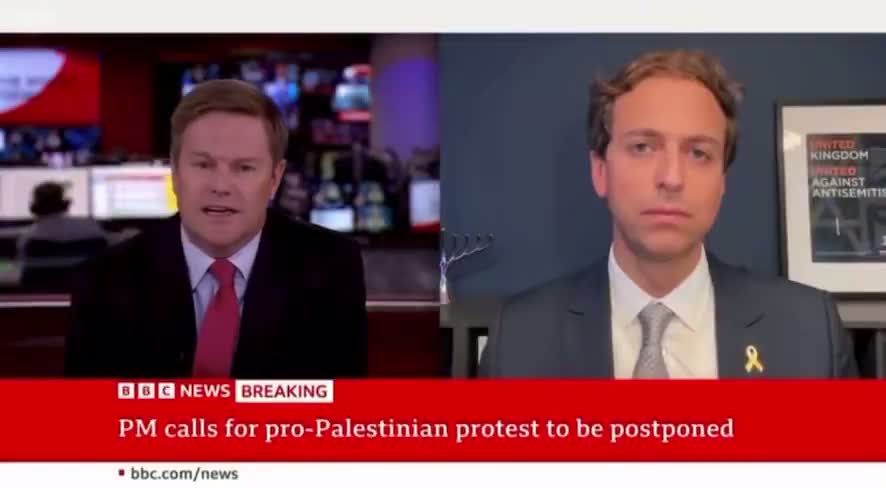
During a recent interview, a BBC journalist questioned Gideon Falter, head of the anti-Semitism watchdog organization. The journalist referenced Falter’s previous comment, in which he claimed that the BBC’s “bias and moral collapse” had transformed the broadcaster into a de facto spokesperson for Hamas. The exchange prompted debate over the BBC’s reporting, with some critics alleging bias in its coverage of Middle Eastern conflicts.
Falter’s assertion drew sharp responses, with some observers and critics labeling the BBC as the “Ayatollah BBC”—a pejorative term used in Iran to criticize perceived pro-Establishment or biased media outlets. The reference underscores the contentious perception of the BBC’s neutrality among certain groups and commentators.
The incident highlights ongoing discussions about media impartiality, especially regarding coverage of the Israeli-Palestinian conflict. While the BBC maintains that it adheres to strict journalistic standards, critics from various perspectives often accuse it of partiality, fueling accusations from both sides of the political spectrum. The debate underscores the broader challenge facing international news organizations in navigating complex geopolitical issues.