
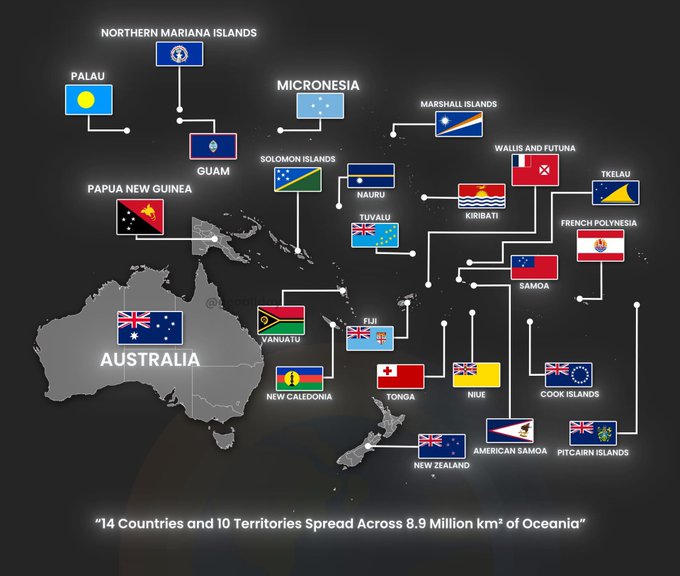
Countries in Oceania encompass a diverse group of nations and territories located in the Pacific Ocean. This region includes both independent countries and territories administered by other nations, spanning from Australia and New Zealand to numerous island nations and microstates.
Australia and New Zealand are among the most prominent countries in Oceania, with developed economies and significant regional influence. Australia, the continent’s largest country, is known for its vast landmass, diverse ecosystems, and vibrant cities such as Sydney and Melbourne. New Zealand is renowned for its scenic landscapes, indigenous Māori culture, and strong agricultural sector.
Beyond these two, Oceania features numerous island nations, including Papua New Guinea, Fiji, Samoa, Tonga, and the Solomon Islands. Many of these islands have small populations and economies that often rely on agriculture, tourism, and natural resource extraction. The region’s geography and cultural diversity make Oceania a unique and important area within the Pacific.
Oceania plays a vital role in global environmental and geopolitical issues, with many island nations facing challenges related to climate change and rising sea levels. While politically diverse, the countries in Oceania collaborate through regional organizations such as the Pacific Islands Forum, emphasizing shared interests and mutual development.