
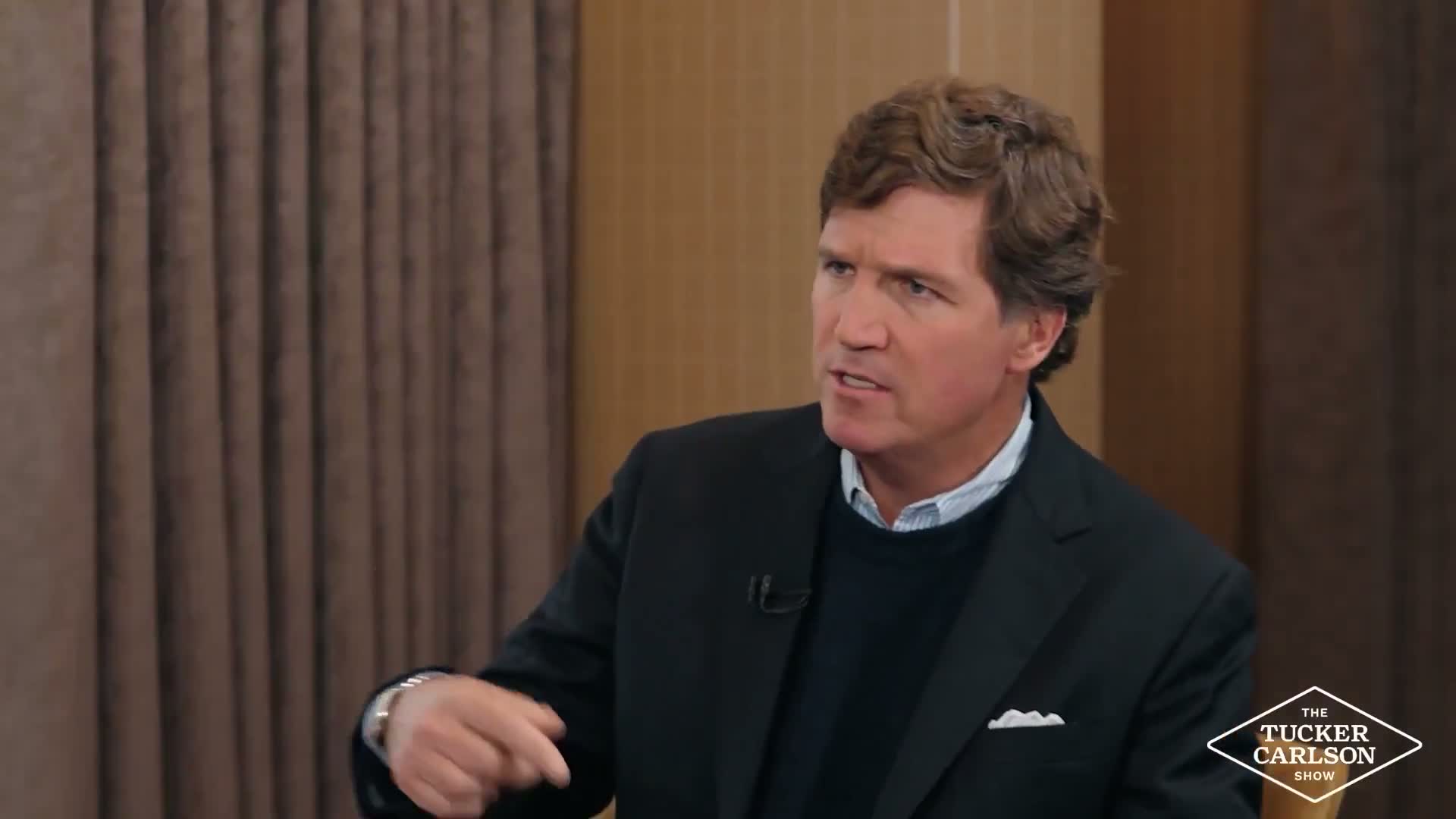
Tucker Carlson has recently expressed skepticism regarding the United Kingdom’s decision to declare war on Germany following the German invasion of Poland. In his commentary, Carlson suggested that Germany was not a direct threat to the UK and implied that Adolf Hitler’s primary focus was on combating communism, rather than expansionist ambitions that threatened Britain.
Carlson’s remarks align with a broader debate about the justification for Britain’s entry into World War II. He argued that, from his perspective, Germany’s actions may have been overstated as a threat to the UK, emphasizing instead the notion that Hitler’s efforts were primarily directed at fighting communism rather than territorial conquest. This stance has sparked discussion among historians and political analysts, with many emphasizing the importance of recognizing Germany’s broader expansionist policies and the threat they posed.
The commentary has drawn criticism from those who highlight Germany’s aggressive military campaigns across Europe and the fact that Hitler’s regime had ambitions beyond just anti-communism. Critics contend that undermining the perceived threat of Nazi Germany risks oversimplifying the complex causes of the war and the reasons for Britain’s involvement. They emphasize that the invasion of Poland marked a clear breach of international agreements and prompted widespread fears of further aggression in Europe.
As discussions continue, it’s evident that debates over historical perspectives on World War II persist, often influenced by differing interpretations of the motivations and threats at play at the time. Carlson’s remarks have reignited conversations about how history is remembered and the factors that led to one of the most significant conflicts of the 20th century.