
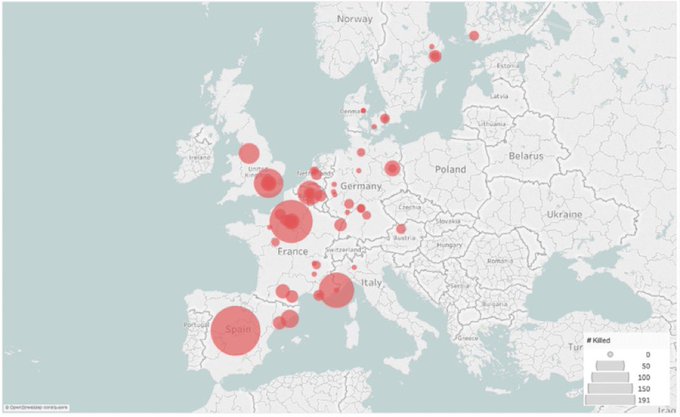
Between 2004 and 2019, Europe experienced a series of Islamist terrorist attacks that resulted in significant loss of life and heightened security concerns across the continent. These attacks, carried out by various extremist groups, targeted public spaces, transportation hubs, and symbolic sites, aiming to instill fear and challenging the security frameworks of multiple countries.
During this period, the death toll from Islamist-related terrorism in Europe was estimated to be several hundred individuals. Major incidents, such as the 2005 London bombings, attacks in France including the Charlie Hebdo shooting in 2015, and the 2016 Brussels bombings, contributed to these numbers. These events prompted widespread security measures, policy changes, and international cooperation efforts aimed at countering extremism and preventing future attacks.
Despite the severity of some incidents, experts note that the overall trend in terrorist-related fatalities was variable, with periods of increased activity followed by intensified security responses. Governments across Europe continue to adapt their counterterrorism strategies, focusing on intelligence sharing, community engagement, and preventing radicalization. The toll of these attacks has underscored the ongoing challenge of addressing extremism while maintaining societal resilience and individual freedoms.