
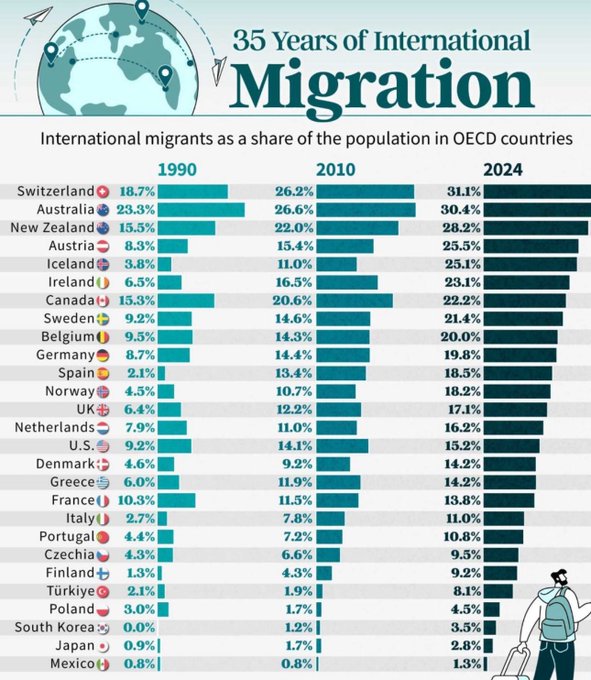
The proportion of first-generation migrants residing in Austria has seen a significant rise over the past three decades, increasing from 8.3% in 1990 to 25.5% in the most recent year. This demographic shift reflects broader patterns of migration and globalization affecting the country’s population makeup.
Austria’s increasing migrant population mirrors trends observed across many OECD member states. In recent years, nearly all these countries have experienced notable growth in their first-generation migrant communities, driven by factors such as economic opportunities, regional conflicts, and international mobility.
Experts suggest that this upward trend presents both challenges and opportunities for Austria, particularly in areas such as integration, social cohesion, and labor markets. Policymakers are increasingly focused on developing strategies to support diverse populations while maintaining social stability.
Overall, Austria’s demographic landscape continues to evolve, with migration playing a crucial role in shaping the country’s social and economic future. The substantial rise in first-generation migrants highlights the importance of adaptive policies in the context of this demographic change.