
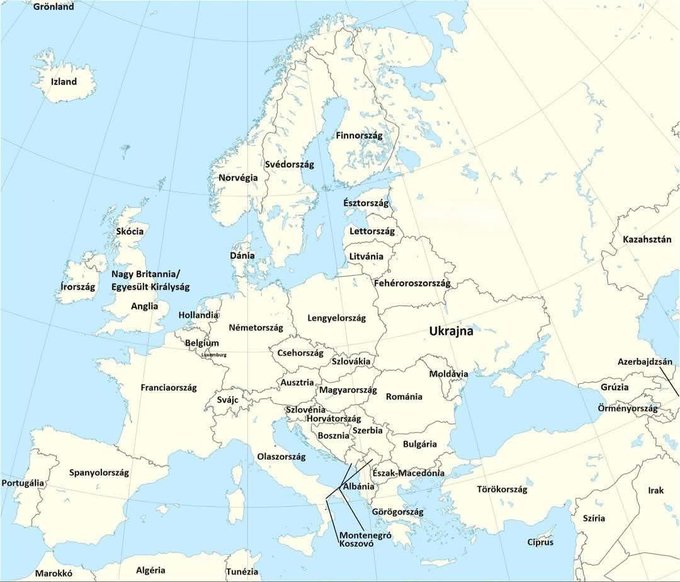
European countries are often referred to by their native or internationally recognized names, but in Hungarian, many of these nations have distinct, localized titles. For example, France is known as “Franciaország,” while Germany is called “Németország.” These Hungarian names often reflect historical, linguistic, or cultural influences unique to the region.
Hungarian, a Uralic language, has preserved its own nomenclature for European countries, offering insight into the country’s linguistic heritage. Italy is called “Olaszország,” and Spain is known as “Spanyolország,” highlighting the linguistic differences from their English counterparts. The names often include the suffix “-ország,” meaning “country” or “land,” which is commonly used in Hungarian to denote nations.
Understanding these names can be helpful for travelers, students, and researchers working with Hungarian texts or communicating with Hungarian speakers. It also provides a window into how Hungary perceives and culturally connects with neighboring nations, emphasizing the country’s linguistic and historical uniqueness within Europe.
Overall, the Hungarian nomenclature for European countries showcases the deep linguistic traditions and cultural distinctions that characterize the Hungarian language. While many names correspond directly or closely to their English equivalents, numerous distinctions highlight the rich tapestry of Europe’s linguistic landscape.