
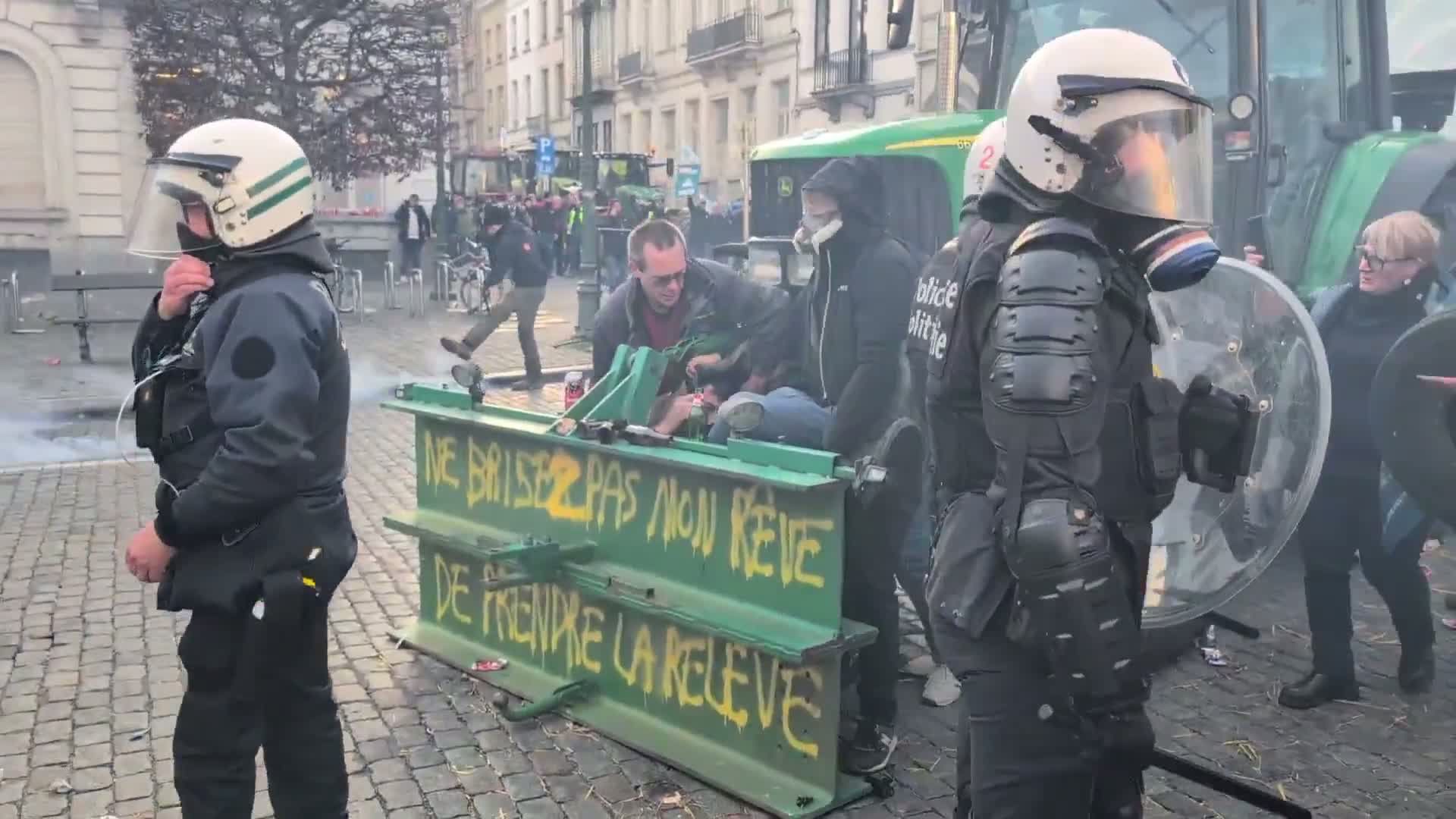
Farmer protests in Brussels have intensified, with thousands of participants mobilizing despite official limits. Authorities initially approved a demonstration involving a maximum of 50 tractors; however, the protest exceeded this number significantly, reflecting growing frustration among farmers over trade negotiations.
The protests are linked to ongoing EU-Mercosur trade talks, which farmers argue threaten local agriculture by opening European markets to cheaper imports from South America. Farmers have expressed concerns that the proposed trade agreements could undermine their livelihoods and lead to a surge in imports of goods produced under different standards.
Local police reported that, although permission was granted for a smaller demonstration, the turnout far surpassed those expectations. The protests brought considerable disruption to parts of Brussels, with farmers blocking roads and gathering outside government offices. Authorities have called for calm and highlighted efforts to ensure safety while acknowledging the farmers’ concerns.
The EU and Mercosur representatives are continuing negotiations, with some European farmers urging the European Commission to reassess trade terms to better protect domestic agriculture. The protests signal ongoing tensions between trade liberalization efforts and agricultural interests within the European Union.