
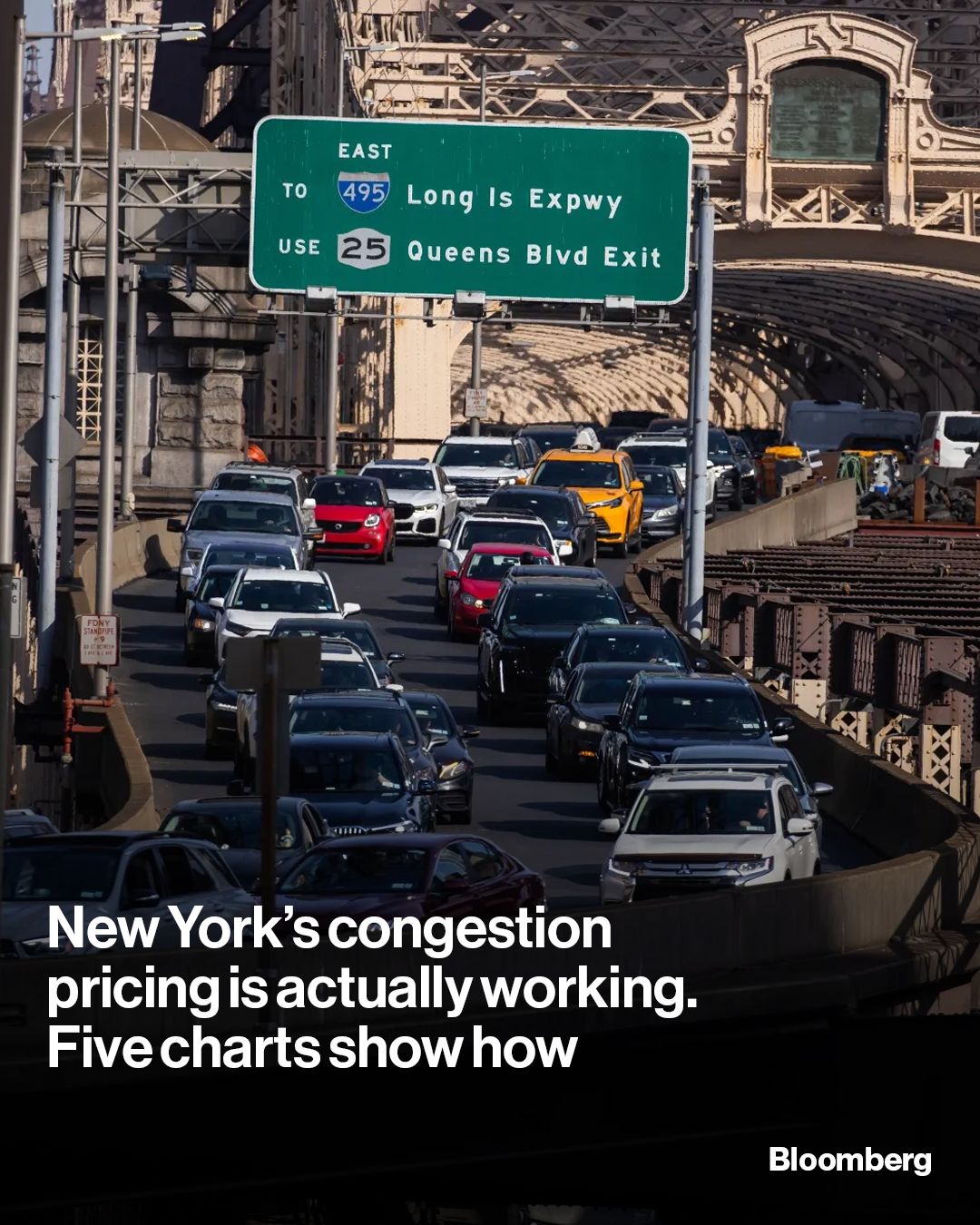
New York City implemented a congestion pricing program nearly a year ago, targeting drivers entering certain busy streets in Manhattan. The initiative aims to reduce traffic congestion, improve air quality, and promote the use of public transportation. The program has faced criticism and debate regarding its impact on drivers and local businesses, but city officials maintain it is a necessary step toward managing urban traffic effectively.
Recent data indicates the program has achieved its primary goal of reducing congestion in targeted areas. According to reports, vehicle traffic in designated zones has decreased significantly since the tolls were introduced. Charts released by Bloomberg illustrate these trends, suggesting that the pricing system is influencing driver behavior and lowering overall gridlock during peak hours.
The tolls are part of broader efforts to modernize New York City’s transportation infrastructure and address longstanding mobility challenges. While some stakeholders express concerns over potential economic impacts and equitable access, city officials emphasize the environmental and quality-of-life benefits stemming from decreased congestion.
As the program continues, officials plan to monitor its effects closely and consider adjustments to optimize outcomes. The initial data suggests that congestion pricing could serve as a model for other major cities seeking sustainable urban mobility solutions.