
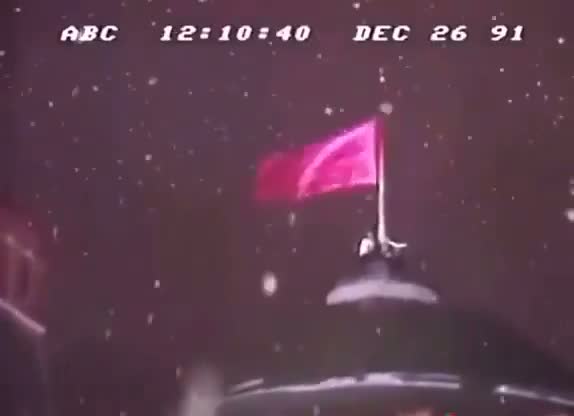
On December 25, 1991, a significant global milestone occurred as the Soviet Union officially dissolved, marking the end of a superpower that had existed for over seven decades. The dissolution was confirmed following the resignation of Soviet President Mikhail Gorbachev, and the red Soviet flag was lowered from the Kremlin for the last time, symbolizing a major shift in international relations. The event signaled the conclusion of the Cold War era and paved the way for the emergence of newly independent states that once comprised the USSR.
The dissolution was hailed by many in the West as a triumph in the Cold War, representing the ideological and political victory of Western democracies over the Soviet communist system. The fall of the Soviet Union led to widespread geopolitical and economic changes, including the expansion of NATO and the integration of former Soviet states into the global economy. For many, the day remains a turning point that marked the end of decades of ideological rivalry.
In the years following, the geopolitical landscape continued to evolve. Recently, Russian President Vladimir Putin has been described as attempting to rebuild Russia’s influence and territory reminiscent of the Soviet era. These developments have sparked discussions about Russia’s ambitions and the stability of the post-Cold War order. While some view these moves as a resurgence of Russian power, others see them as efforts to restore national prestige and regional influence.
As history unfolds, the anniversary of the Soviet Union’s dissolution remains a moment of reflection on the dramatic changes of the early 1990s and their lasting impact on international relations. The contrast between the triumphant end of the Cold War era and contemporary geopolitical tensions continues to shape global discourse today.