
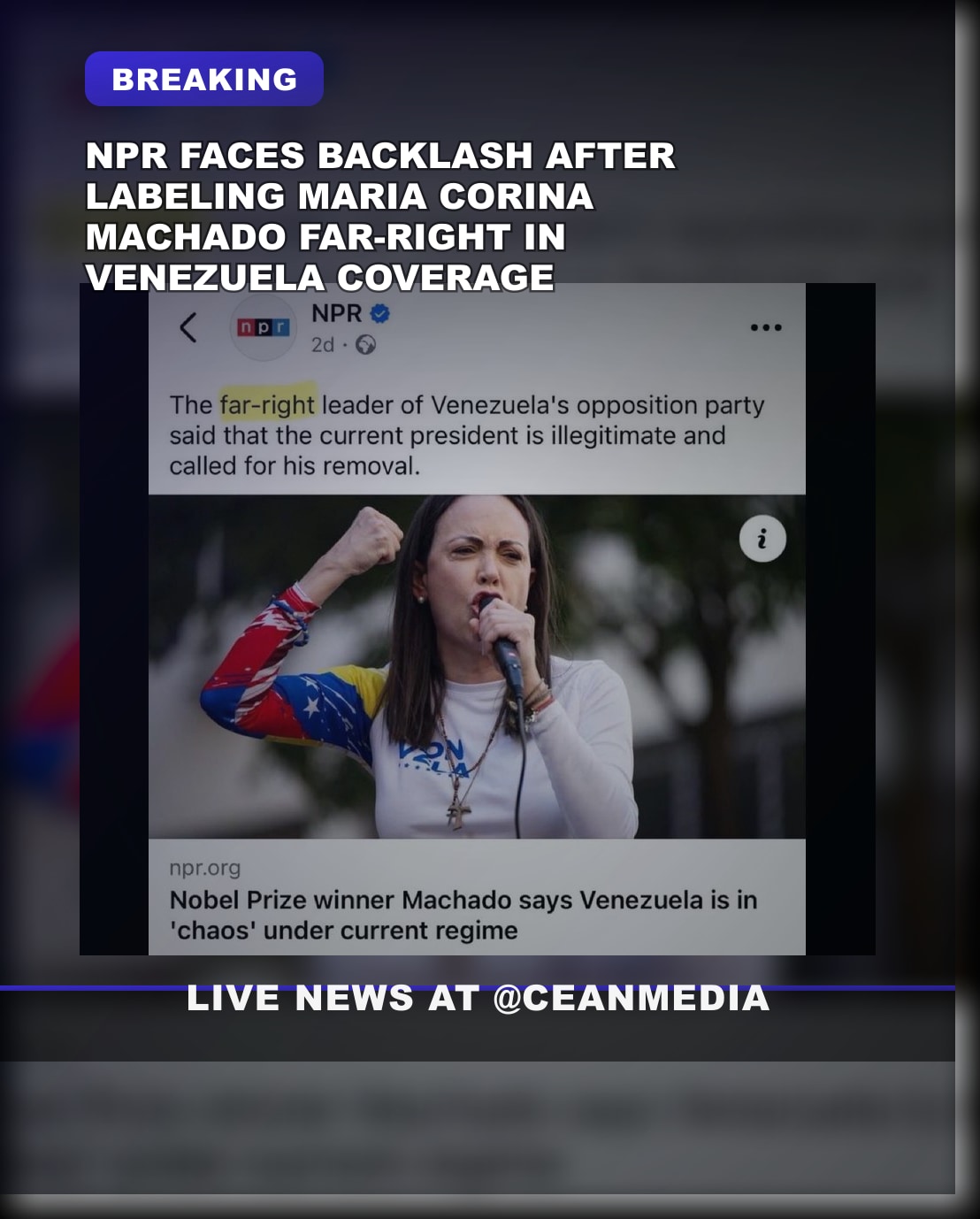
Recent commentary has drawn attention to a past instance where NPR referred to Venezuelan opposition leader Maria Corina Machado as “far-right.” The characterization highlights ongoing debates over political labels and media framing in coverage of Machado, who is a prominent figure in Venezuela’s political landscape advocating for democracy and opposition to the current government.
The reasoning behind NPR’s description remains a subject of speculation, with some observers questioning whether it reflects ideological bias, journalistic judgment, or contextual factors at the time of reporting. Machado has garnered both support among her followers and criticism from government allies, making her a polarizing figure in Venezuela’s political discourse.
This labeling has prompted discussions about media representation and the importance of consistent, nuanced coverage of political figures, especially in highly polarized environments. Critics argue that such descriptors can influence public perception and potentially oversimplify complex political identities, while supporters see it as a way to contextualize Machado’s positions within broader ideological spectra.
As conversations continue, it underscores the broader challenge faced by media outlets in balancing impartial reporting with the intricacies of political narratives. The incident serves as a reminder of how language and framing in journalism can shape understanding of key political actors in contentious contexts.