
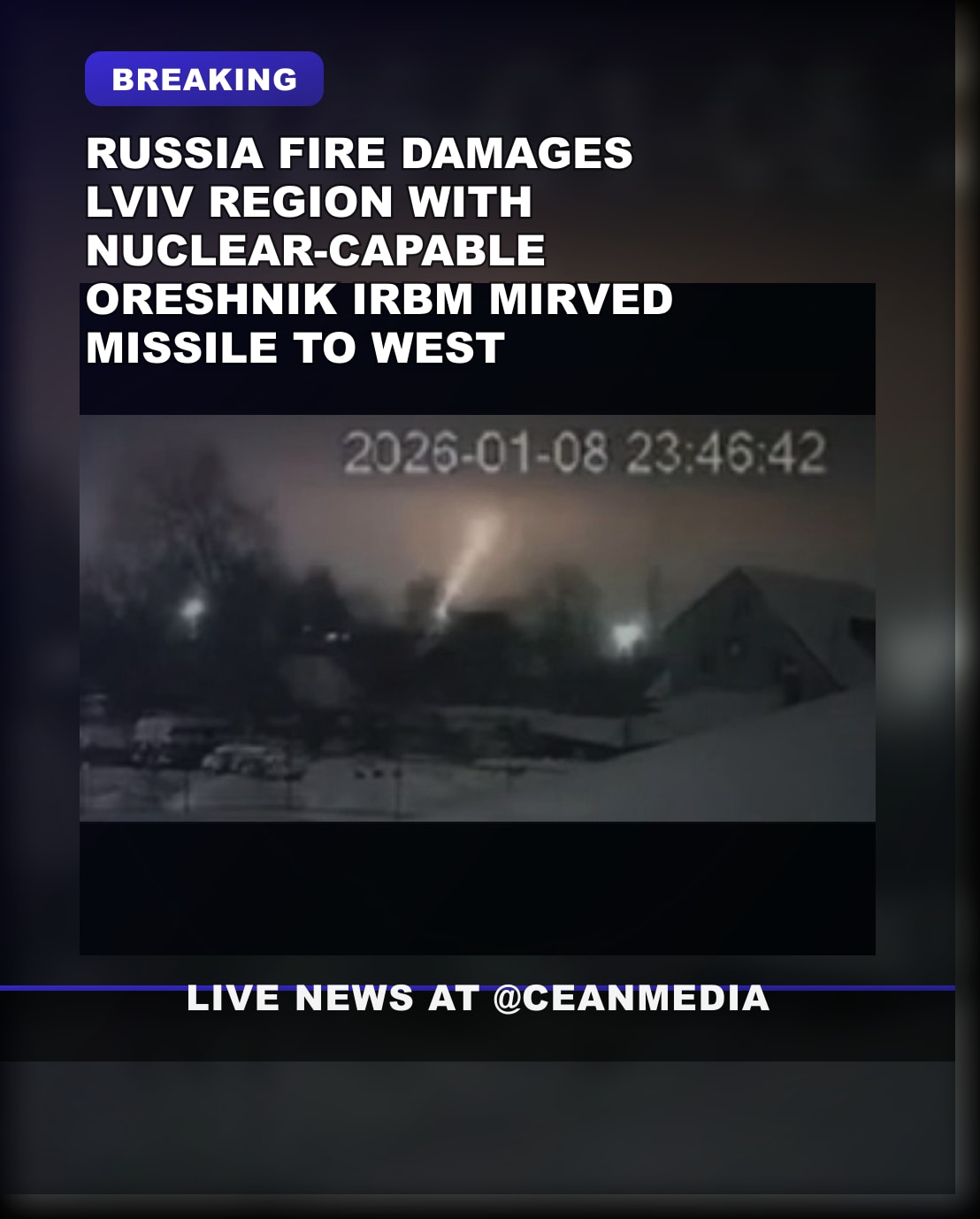
Russian forces reportedly launched a missile strike targeting the Lviv region, located approximately 70 kilometers from Ukraine’s border with Poland, an EU and NATO member. The missile has been identified as an Oreshnik IRBM with MIRV (Multiple Independently targetable Reentry Vehicle) technology, which is capable of delivering multiple warheads to different targets. The incident marks a significant escalation due to the missile’s nuclear-capable designation.
The strike has heightened concerns among Western nations regarding Russia’s military intentions and the potential for further escalation in the region. While Kyiv has not officially confirmed the damage or casualties, the event has prompted international discussions about security and response measures. Moscow’s use of advanced missile technology signals a message aimed at Western countries and their allies, amid ongoing tensions related to the conflict in Ukraine.
Western leaders have responded cautiously, urging restraint and emphasizing the importance of diplomatic engagement. The incident underscores the delicate security balance in Eastern Europe and the NATO alliance’s considerations in providing support to Ukraine. Analysts and officials continue to monitor developments closely for any signs of escalation or retaliation.
Amidst these tensions, there are calls for strategic responses from Western governments and security experts. The international community is working to assess the implications of the attack and to formulate appropriate diplomatic, military, and economic measures to address the situation. The coming days are likely to be critical in shaping the regional response to this provocative act.