
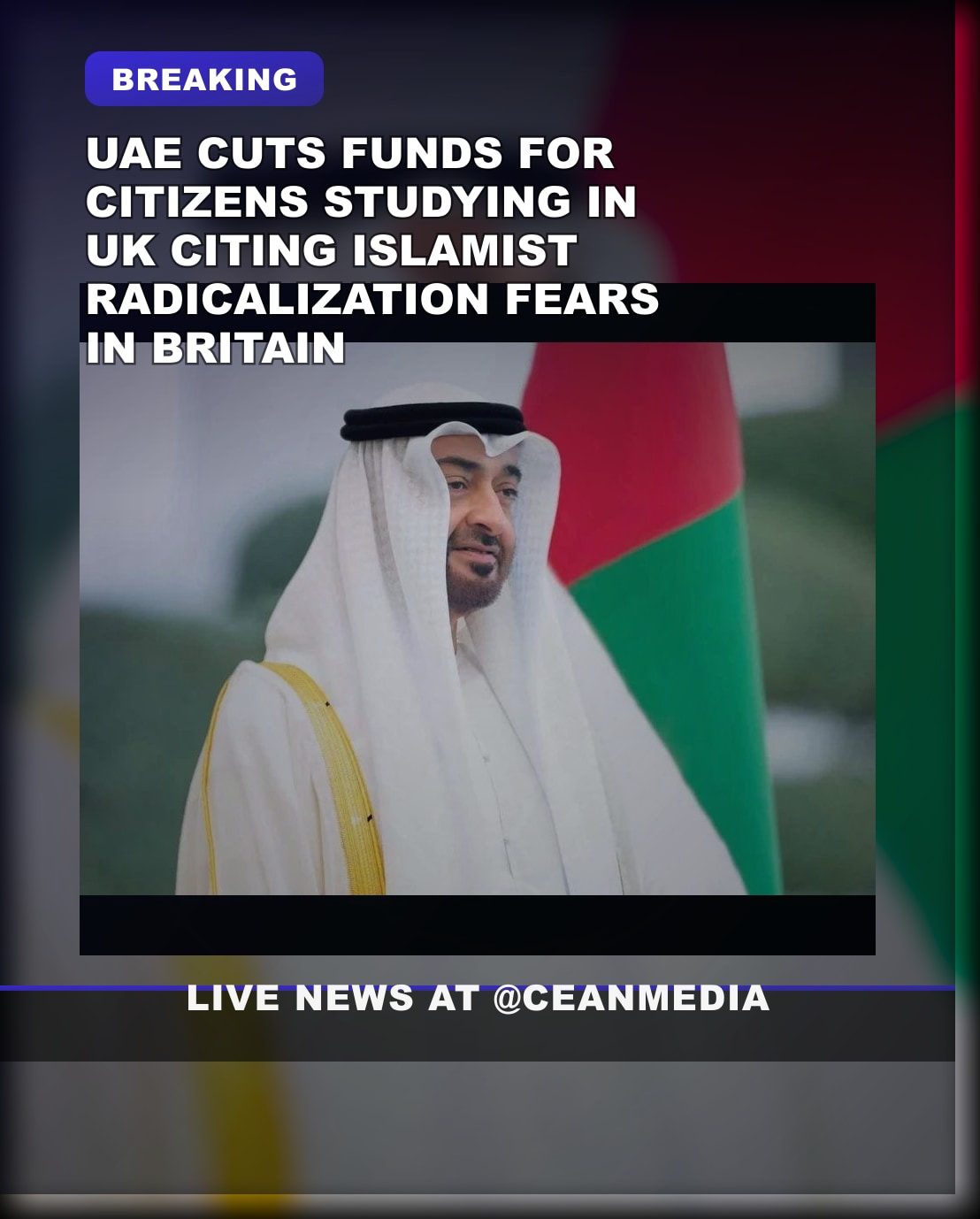
The United Arab Emirates has announced plans to cut funding for Emirati students seeking higher education in the United Kingdom. The decision stems from concerns over potential radicalization risks associated with certain Islamist groups, particularly the Muslim Brotherhood, on British university campuses. UAE officials cited security and ideological concerns as primary reasons for the funding suspension.
The move marks a shift in the UAE’s approach to international education support, emphasizing caution amid ongoing fears about radical influences. It also reflects broader regional anxieties regarding the proximity of European countries to radical Islamist movements, which some Arab states consider a threat to national security and stability.
While the UAE has not explicitly designated the UK as a dangerous hotspot, the decision underscores growing apprehensions about ideological infiltration through overseas educational environments. Critics argue that such measures could impact diplomatic and academic relations between the two countries, while supporters contend it is a necessary step to safeguard national interests.
As of now, there has been no official response from the UK government regarding the UAE’s funding suspension. The situation highlights ongoing concerns in the Gulf region about extremism and the influence of political Islam, shaping security policies both locally and internationally.