
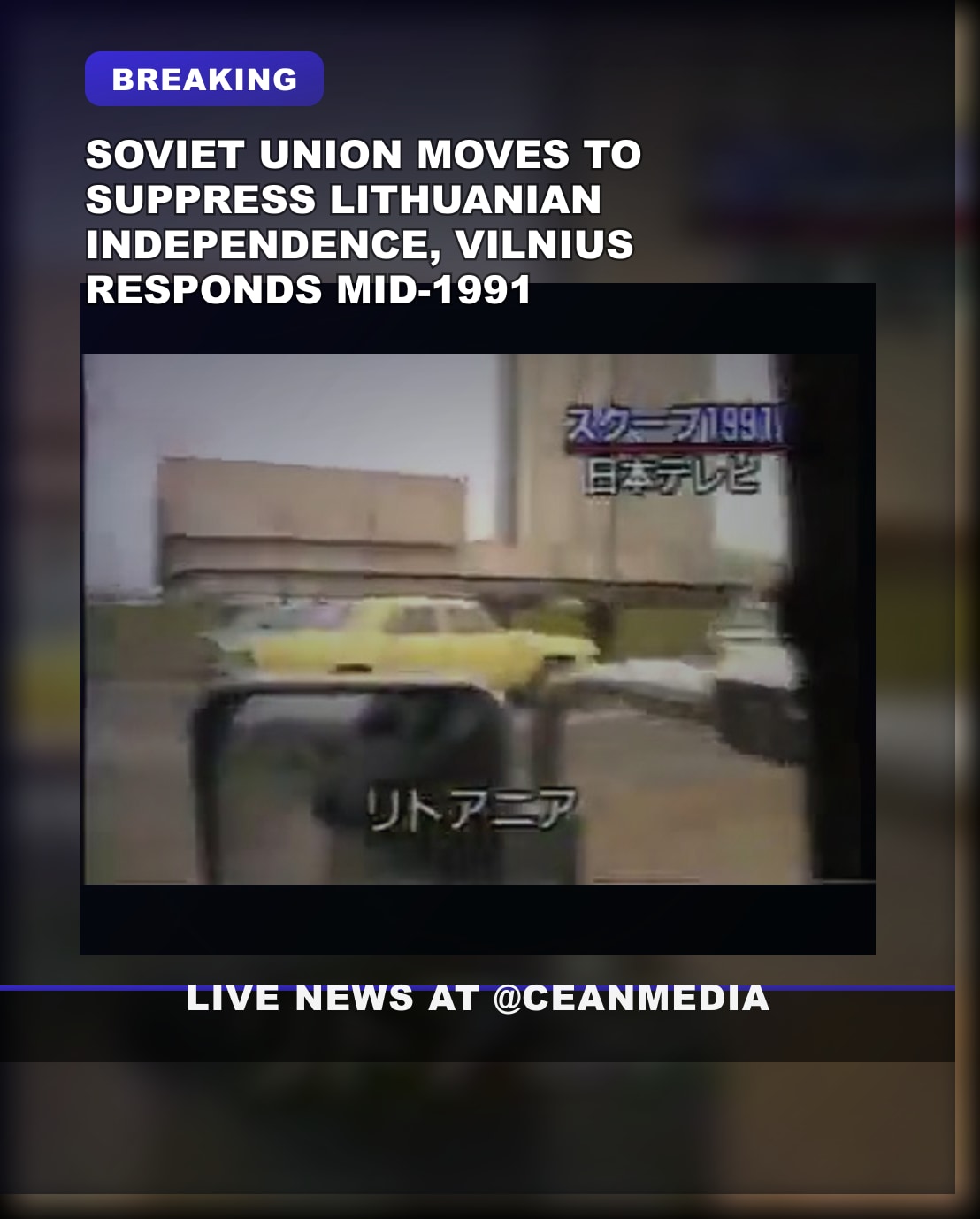
In January 1991, tensions in Vilnius, Lithuania, escalated as Soviet forces revealed their contentious stance towards Lithuania’s move toward independence. This period marked a significant shift, with the Soviet Union displaying its opposition to the republic’s declaration of independence, which was first announced on March 11, 1990. Lithuania’s decision to seek full sovereignty was a landmark event as it became the first Soviet republic to formally declare its independence, challenging Moscow’s authority over its constituent states.
Following Lithuania’s declaration, the Soviet government refused to recognize the move and sought to reassert control over the Baltic nation. Less than a year after Lithuania’s declaration, Moscow’s response was marked by increased political and military pressure aimed at reversing the independence efforts. This effort culminated in an attempted crackdown in Vilnius that resulted in confrontations and the use of force, highlighting the Soviet Union’s reluctance to cede control and its readiness to take severe measures to maintain its territorial integrity.
The events of January 1991 and the subsequent crackdown drew international attention and increased diplomatic pressure on Moscow. Despite the Soviet Union’s efforts to quell the independence movement, Lithuania persisted in its pursuit of sovereignty. The period exemplified the broader struggles within the USSR as various republics sought independence, ultimately contributing to the dissolution of the Soviet Union two years later. The unfolding conflict in Vilnius remains a significant chapter in the history of the Baltic independence movement and the decline of Soviet influence in Eastern Europe.