
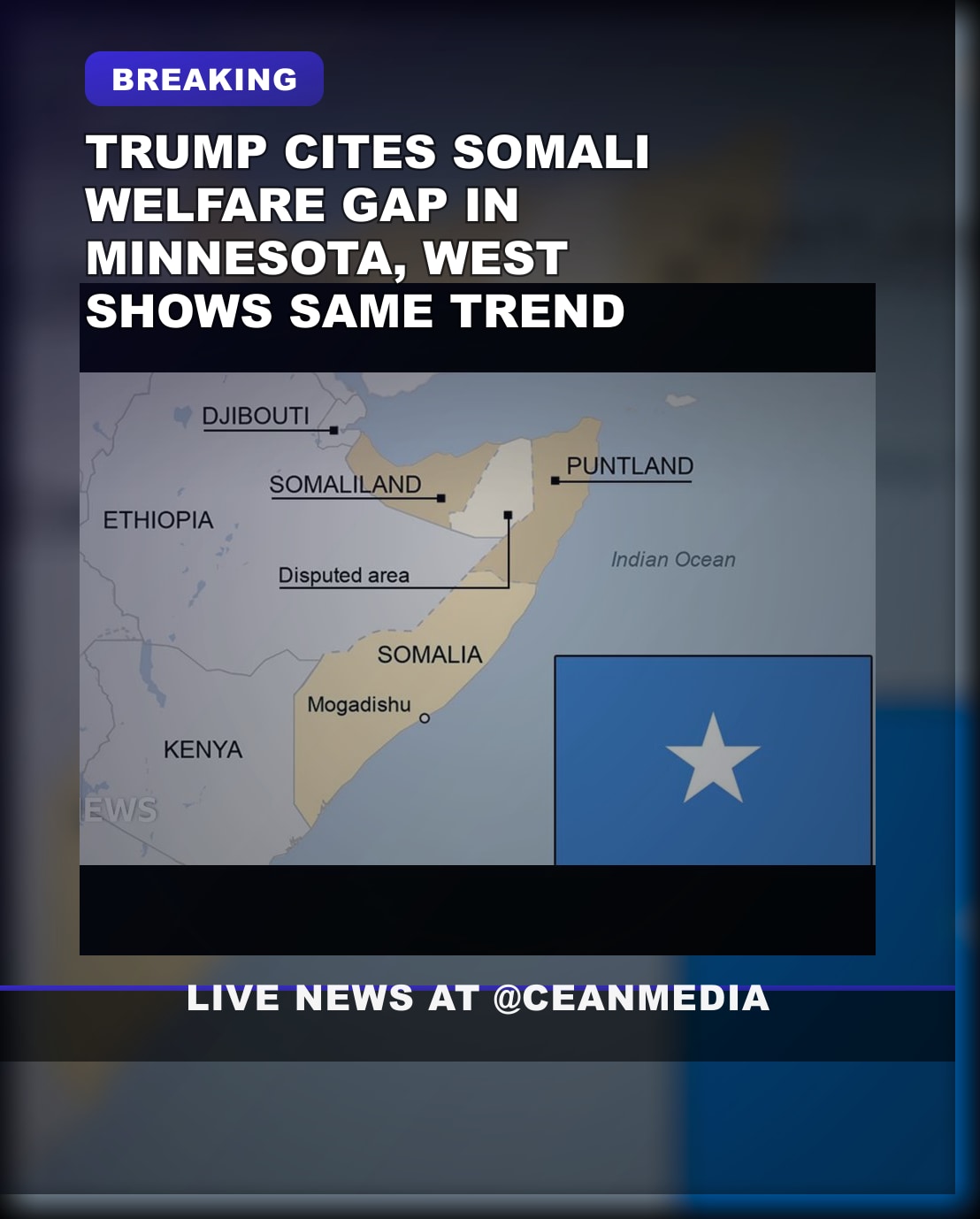
Former President Donald Trump recently shared statistics indicating that approximately 90% of Somali households with children in Minnesota are receiving some form of welfare assistance. He contrasted this figure with the broader state average, where around 30% of households with children are on welfare. Trump’s post suggests significant welfare reliance within the Somali community in Minnesota, a trend he implies extends to Somali populations across the Western countries he referenced.
The statistics referenced by Trump reflect longstanding discussions about economic integration and support services within immigrant communities. Advocates for the Somali community often emphasize factors such as language barriers, employment opportunities, and social services that influence welfare participation rates. Critics may view the figures as indicative of larger systemic issues, while supporters argue against generalizations that could stigmatize the community.
It is important to note that welfare participation rates can be affected by various factors, including demographic characteristics, workforce integration, and policy frameworks. Experts recommend nuanced analysis when interpreting such statistics, avoiding assumptions about individual household circumstances or overall community prosperity.
These figures come amid ongoing debates over immigration and social welfare policies in the United States and Western countries, with discussions often focusing on integration challenges and economic contributions of immigrant communities. As this issue garners attention, community leaders and policymakers may consider targeted interventions to address underlying economic and social needs.