
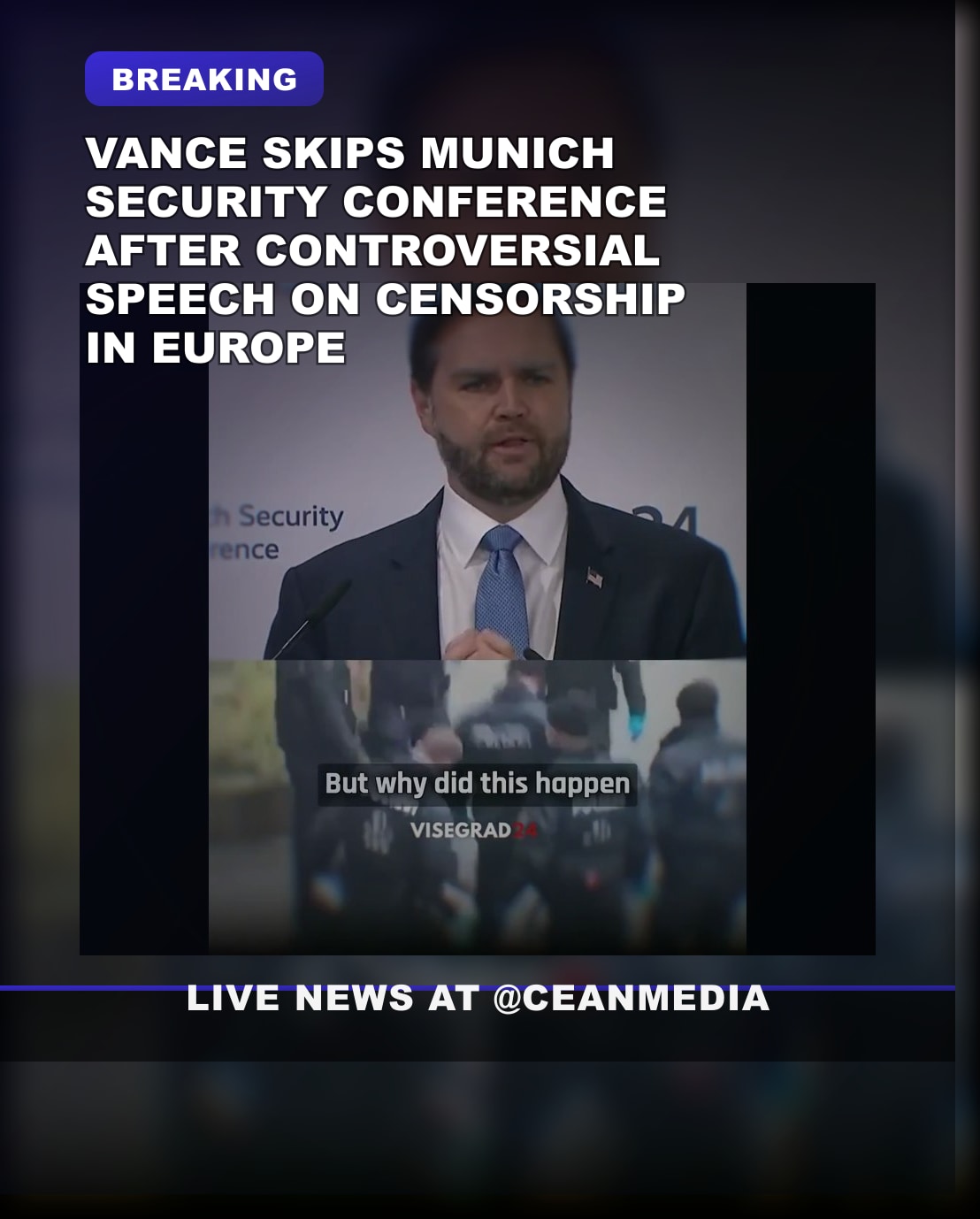
U.S. Vice President J.D. Vance will not attend this year’s Munich Security Conference, according to official sources. His absence marks a change from previous years, when he engaged in discussions on international security and policy matters. The decision comes amid ongoing debates over transatlantic cooperation and differing priorities between the United States and European allies.
Last year, Vance delivered a speech criticizing European social media censorship and the persecution of dissenting voices, drawing attention to differing approaches to free speech and regulation across the Atlantic. His comments stirred discussions on the balance between security, regulation, and civil liberties in Europe. The previous conference was notably marked by heightened security concerns following a terror attack in Munich, where an Islamist-driven car-ramming incident occurred just a day before Vance’s scheduled speech.
The absence of the U.S. Vice President from this year’s event underscores ongoing diplomatic and security considerations amidst a complex geopolitical climate. While details on the reasons for his non-attendance have not been fully disclosed, analysts suggest it may reflect scheduling conflicts or strategic diplomatic choices. The conference continues to serve as a key platform for international dialogue on security issues, with many leaders expected to participate.