
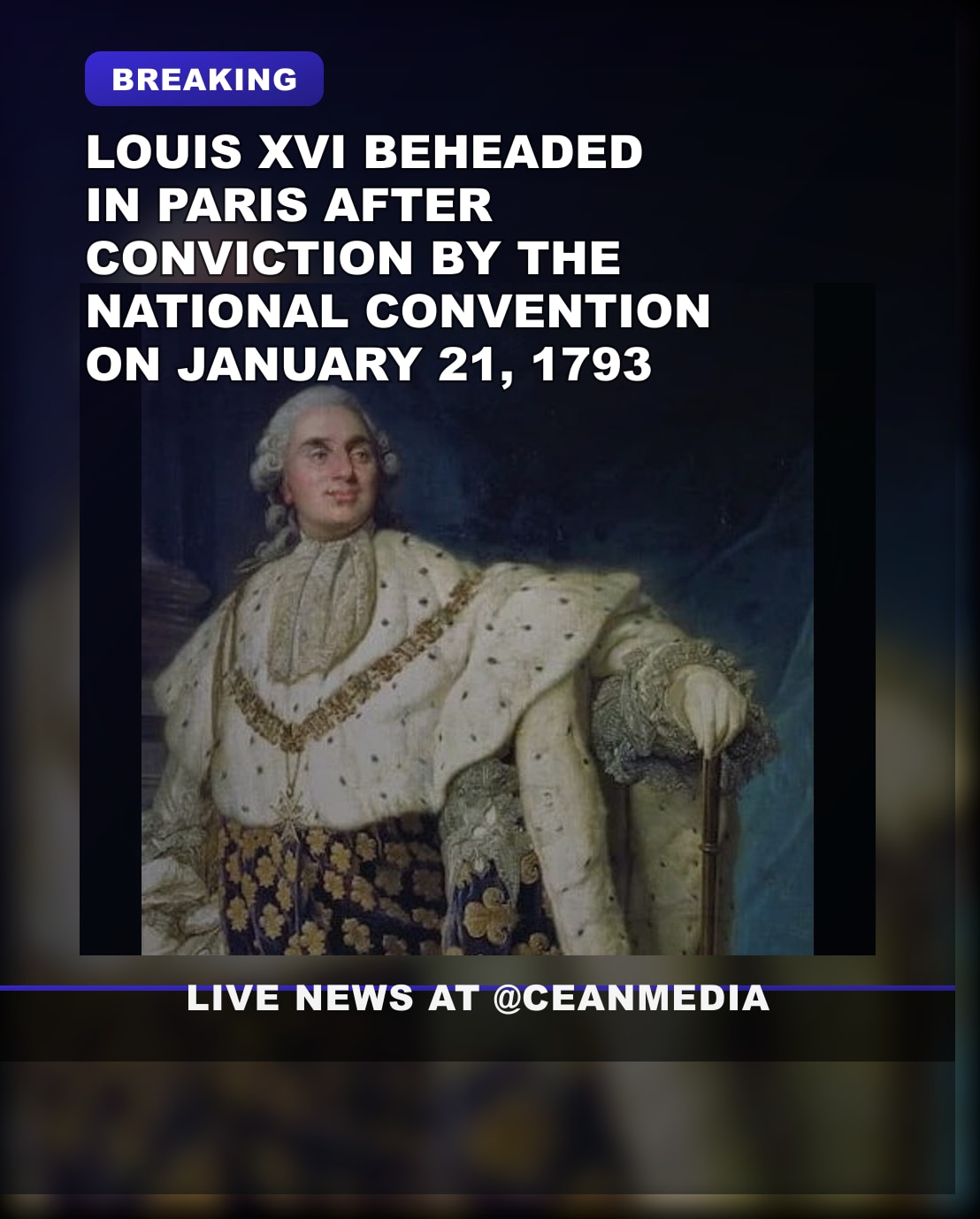
On January 21, 1793, Louis XVI was executed by guillotine in Paris, marking a pivotal moment in the French Revolution. The former king was convicted of high treason and other charges by the revolutionary National Convention after a trial that lasted several days. His death signified the end of the monarchy that had ruled France for centuries.
The execution was a dramatic turning point in the upheaval that was transforming France’s political landscape. Louis XVI’s death intensified the revolutionary efforts to establish a republic and diminish monarchical powers. It also drew both domestic and international reactions, with some viewing it as a necessary step toward reform and others questioning the violence of the revolutionary process.
Following his death, France entered a period marked by political instability and ongoing conflict. The revolution’s radical phase continued, with the Reign of Terror ensuing shortly afterward. Meanwhile, royalist sympathizers and foreign monarchies condemned the execution, further fueling the revolutionary insurgency and external wars.
The execution of Louis XVI remains a significant historical event, emblematic of the radical changes that reshaped France and had lasting effects on the balance of power in Europe. It signaled the definitive collapse of the ancien régime and the rise of revolutionary ideals that would influence subsequent political developments both in France and worldwide.