
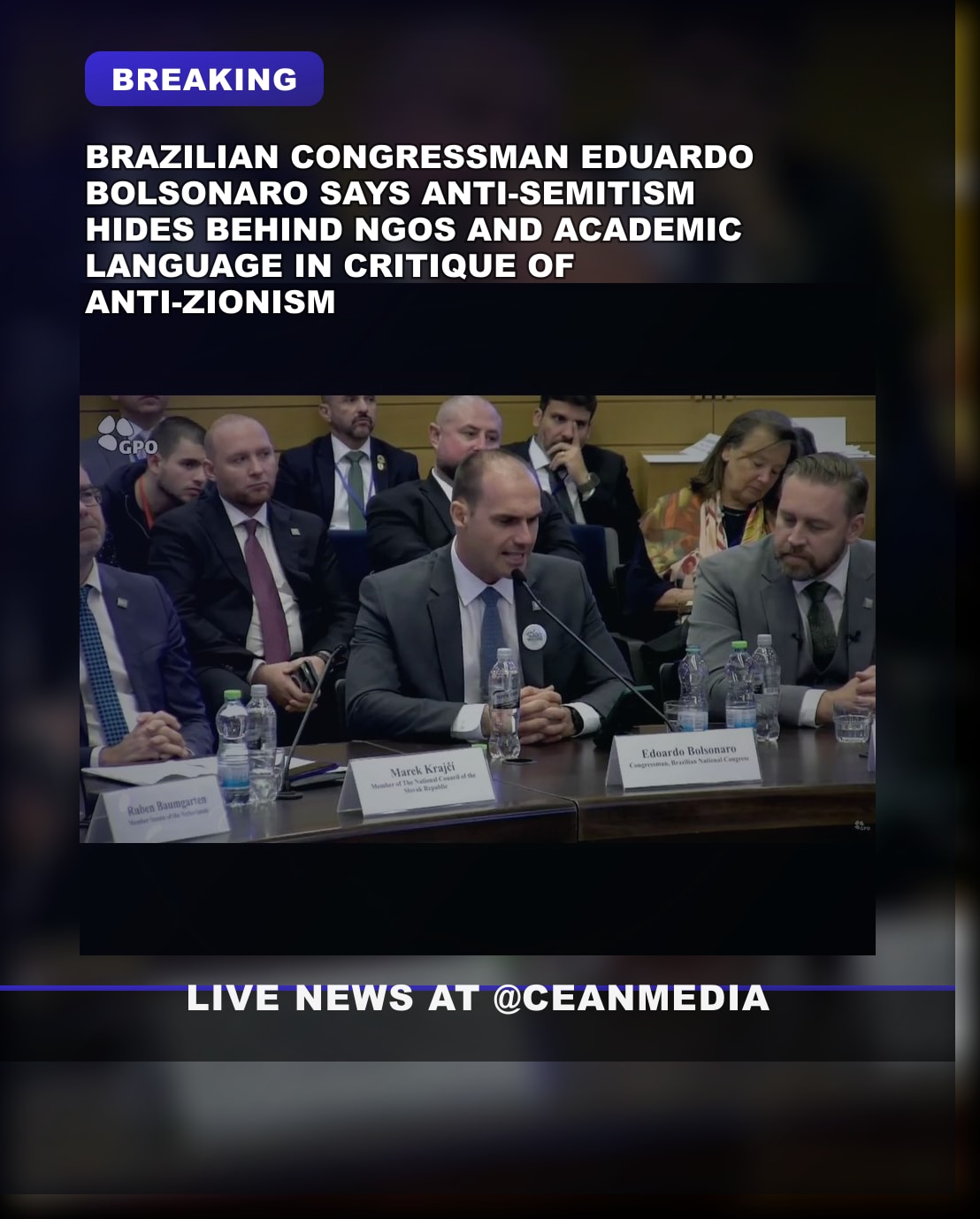
Brazilian Congressman Eduardo Bolsonaro has recently voiced concerns about the evolving nature of anti-Semitism, highlighting that it no longer always manifests through overt symbols like swastikas. Instead, he cautioned that anti-Semitic sentiments are increasingly appearing in subtler forms, often hidden within various organizations and discourse.
In a social media post, Bolsonaro pointed out that anti-Semitism now sometimes operates under the guise of humanitarian aid, non-governmental organizations (NGOs), and academic language. He emphasized that these channels can sometimes mask underlying anti-Semitic motives, making it harder to identify and combat.
Bolsonaro specifically mentioned the term “anti-Zionism,” suggesting that its use can be a guise for anti-Semitic attitudes. Critics and observers note that while anti-Zionism relates to political opposition against the State of Israel, it can sometimes serve as a cover for anti-Semitic beliefs, potentially fueling hostility. The comments have sparked discussion about the importance of distinguishing legitimate political critique from hate speech.
The statement adds to ongoing debates in Brazil and worldwide regarding the forms of anti-Semitism and how to address its different expressions. It underscores the challenges faced by communities and authorities in identifying and combating prejudice that takes more covert forms amid broader societal and political tensions.