
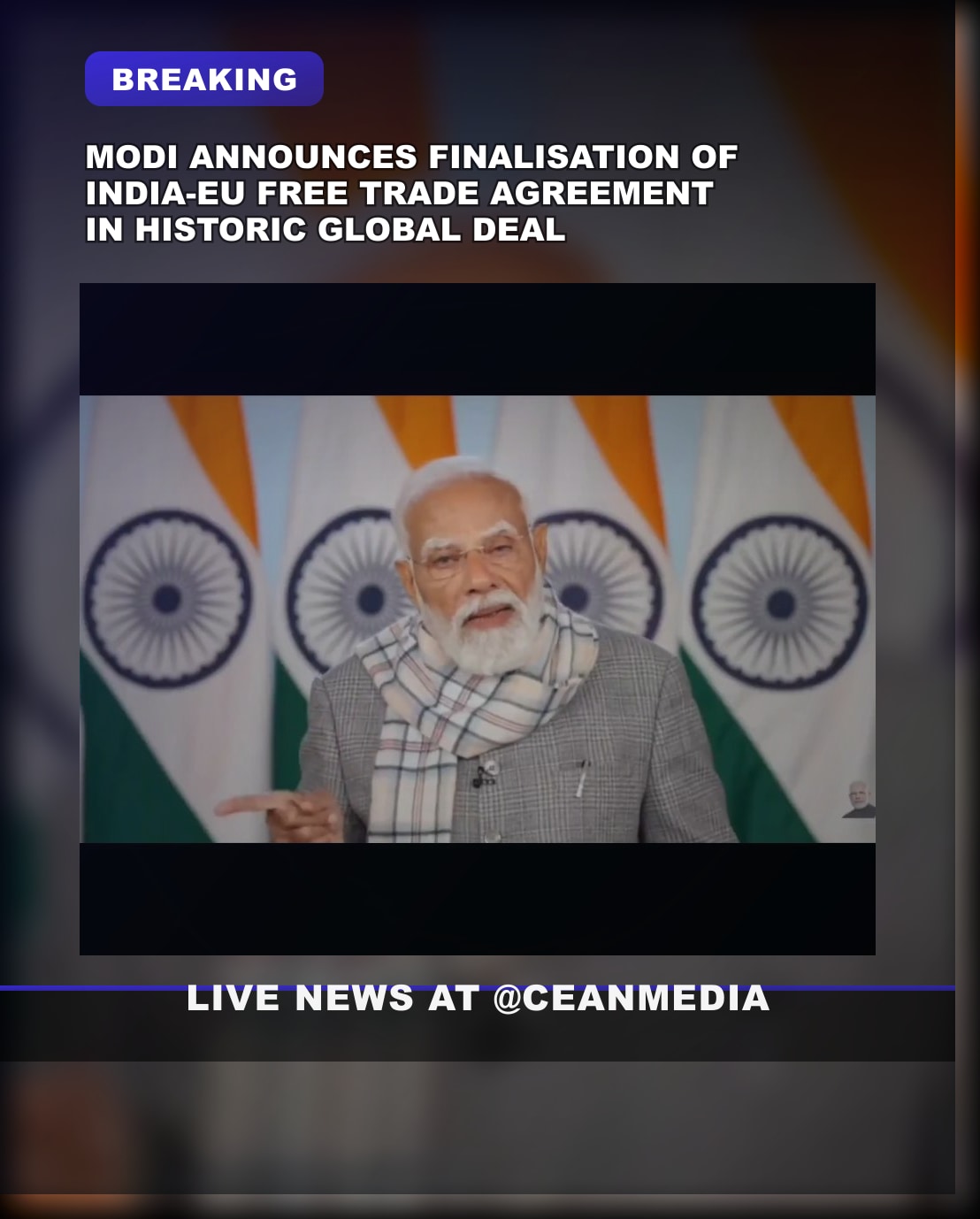
India and the European Union have announced the finalization of a comprehensive free trade agreement, marking a significant development in international trade relations. Indian Prime Minister Narendra Modi described the agreement as a “very big” deal, highlighting its importance on the global stage. He referred to it as the “mother of all deals,” emphasizing its scale and potential impact.
The India-EU free trade agreement covers a broad range of sectors, aiming to boost economic cooperation between the two entities. The deal is particularly notable because the combined economic influence of India and the EU accounts for approximately 25% of global GDP and roughly one-third of worldwide trade, according to Modi. This development is expected to facilitate increased trade and investment flows, potentially reshaping supply chains and economic partnerships.
Industry experts and analysts have expressed cautious optimism about the agreement, noting that it could lead to reduced tariffs, expanded market access, and enhanced economic growth for both India and EU member states. However, the deal’s implementation and long-term effects remain to be seen, as negotiations and ratification processes continue. Overall, the agreement represents a major step in strengthening economic ties between India and the European Union, with potential implications for global trade dynamics.