
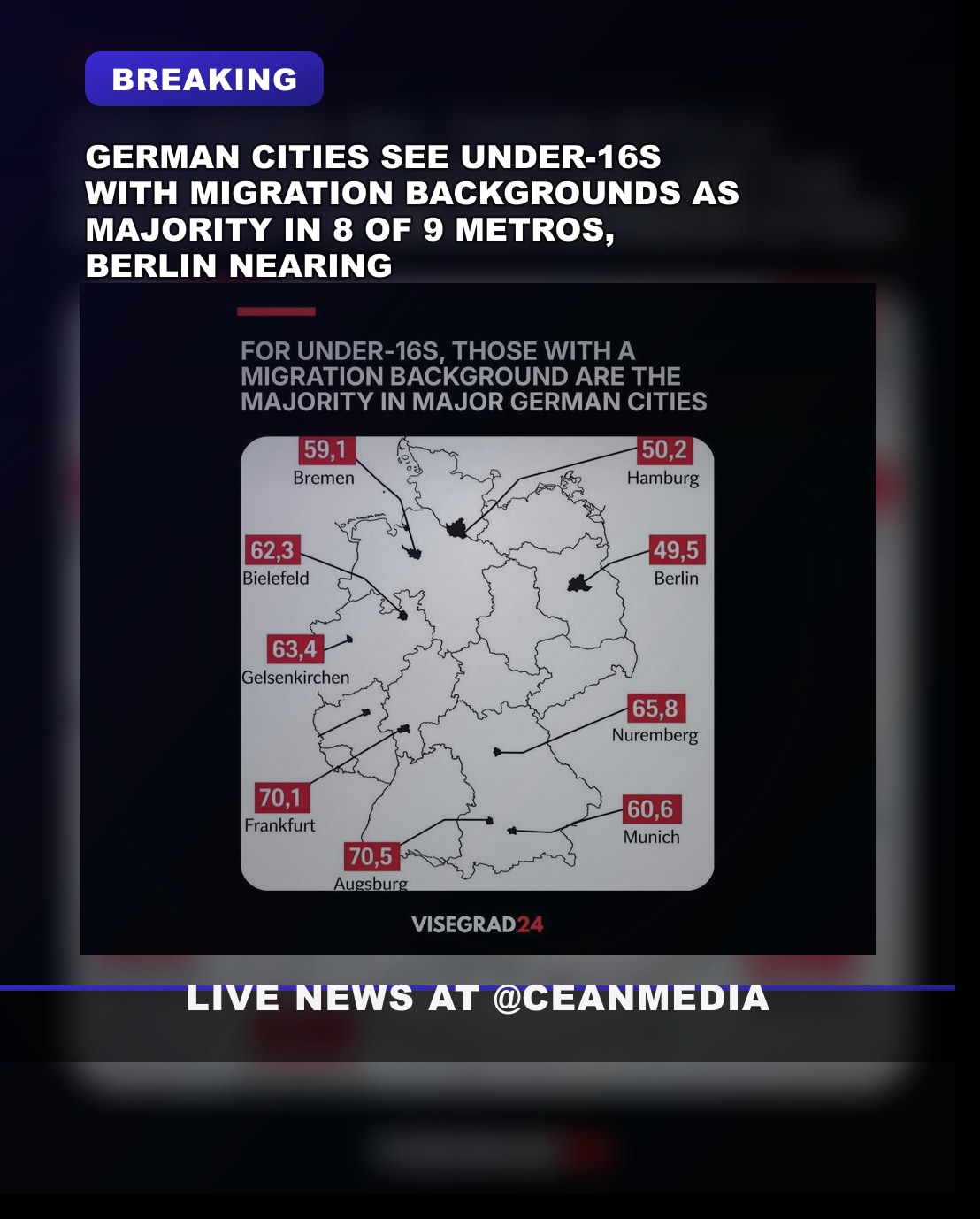
In several major German cities, children and adolescents under the age of 16 with a migration background constitute the majority. According to data from Destatis, in eight out of nine of these urban areas, the demographic segment with migration roots surpasses 50 percent. Berlin, in particular, is nearing this threshold, reflecting its diverse population makeup.
The trend highlights ongoing demographic shifts within Germany’s urban centers, driven by migration patterns over recent years. Cities with higher proportions of residents with migration backgrounds often boast vibrant, multicultural communities, which influence local culture, education, and social services.
These statistics underscore the importance of integrating diverse populations, as well as addressing specific needs within these communities. The data compiled by demografie-europa offers an important perspective on the changing demographic landscape across Germany’s leading cities, emphasizing the dynamic nature of urban populations in the country.