
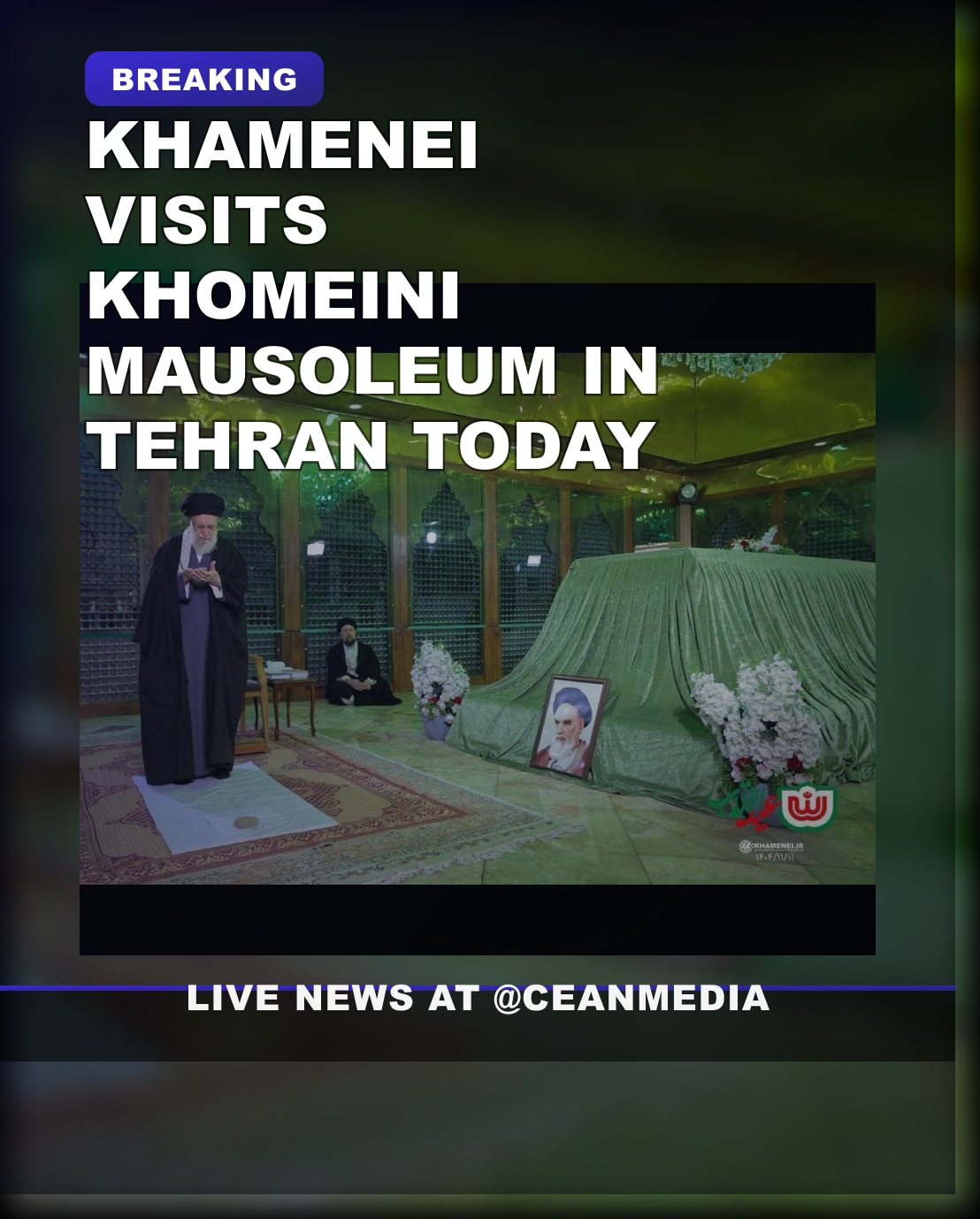
Iranian Supreme Leader Ali Khamenei visited the mausoleum of Ruhollah Khomeini, the founder of the Islamic Republic, today. The visit occurred amid ongoing debates within Iran regarding the legacy of Khomeini and the direction of the country’s political future. Khamenei’s pilgrimage to the site underscores his role as the current custodian of Khomeini’s influence and the continuity of the Islamic Republic’s leadership.
The mausoleum, located in southern Tehran, remains a significant site for many supporters and officials within Iran. Such visits are often symbolic, reaffirming the ideological foundation of the state and the leadership’s connection to the country’s revolutionary history. Observers note that public visits to Khomeini’s mausoleum remain a regular feature of official duties for Iran’s leadership.
The visit comes at a time of internal and regional tensions for Iran, with domestic political debates and international negotiations over Iran’s nuclear program. While the purpose of the visit was not explicitly stated, it is seen by some analysts as an effort to reinforce the legitimacy of Khamenei’s leadership and his alignment with Khomeini’s revolutionary ideals. The visit did not generate any notable public statements or disruptions.
As Iran continues to navigate complex political and diplomatic challenges, such symbolic acts remain an integral part of the official narrative and leadership strategy. The mausoleum visit serves as a reminder of the enduring influence of Iran’s revolutionary history on its contemporary political landscape.