
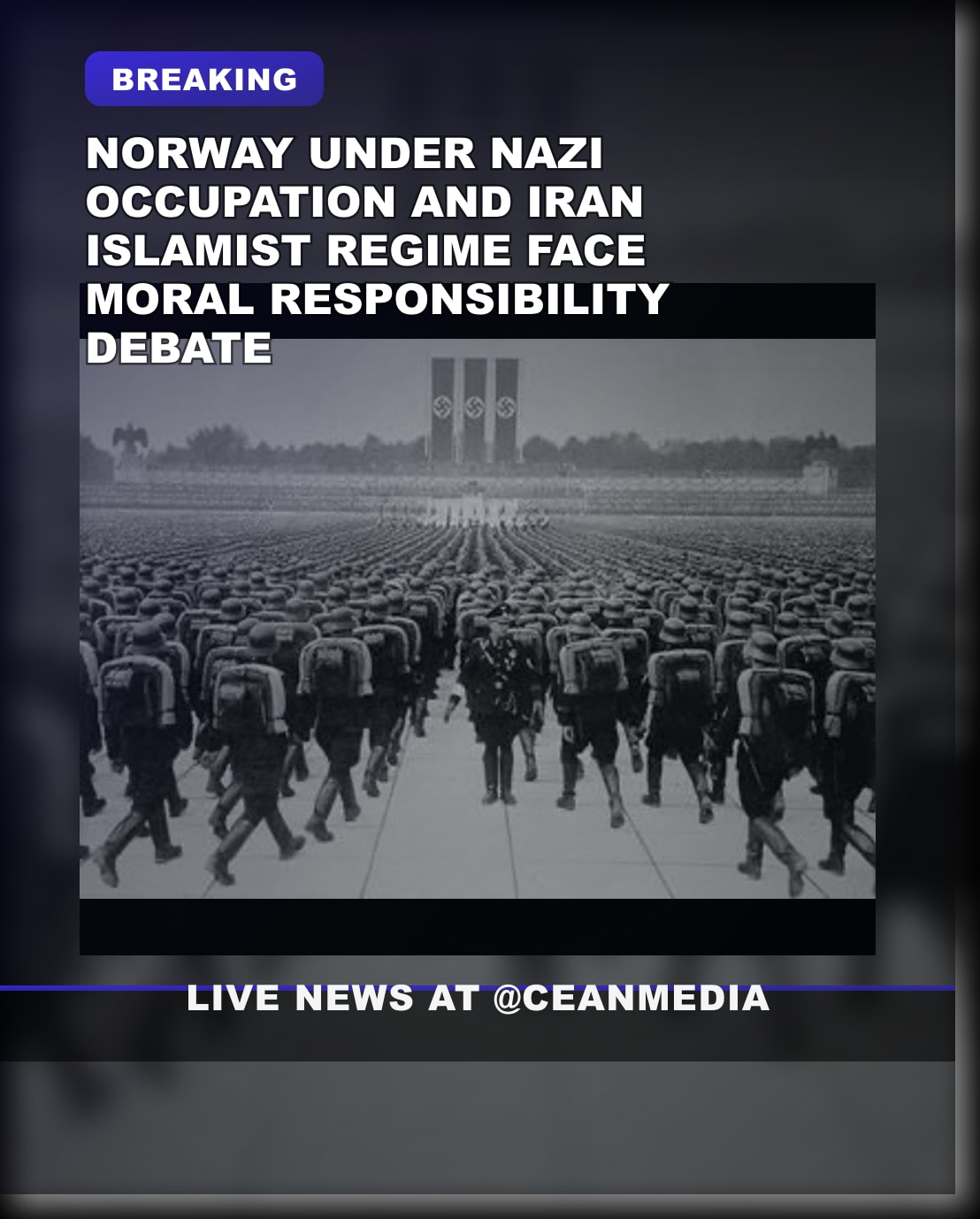
A recent personal reflection by Arvin Khoshnood explores the complex issue of responsibility for crimes committed under authoritarian regimes, drawing historical and contemporary parallels. Khoshnood examines Norway’s experience under Nazi occupation during World War II and compares it to Iran’s current Islamist regime, highlighting themes of leadership, resistance, and moral accountability.
The article delves into questions about who bears responsibility for atrocities—whether it resides solely with the perpetrators or also extends to those in positions of authority and the broader society. Khoshnood emphasizes the importance of moral leadership and resistance in the face of oppressive systems, illustrating how individuals and institutions can either enable or oppose such regimes.
While acknowledging the unique historical contexts, the reflection invites readers to consider the ongoing relevance of moral responsibility in resisting tyranny and holding regimes accountable. The piece encourages a nuanced understanding of complicity and the roles played by leaders, institutions, and ordinary citizens in confronting crimes committed under both Nazi and Islamist regimes.
For more detailed insights, the full reflection is available at Visegrad 24.