
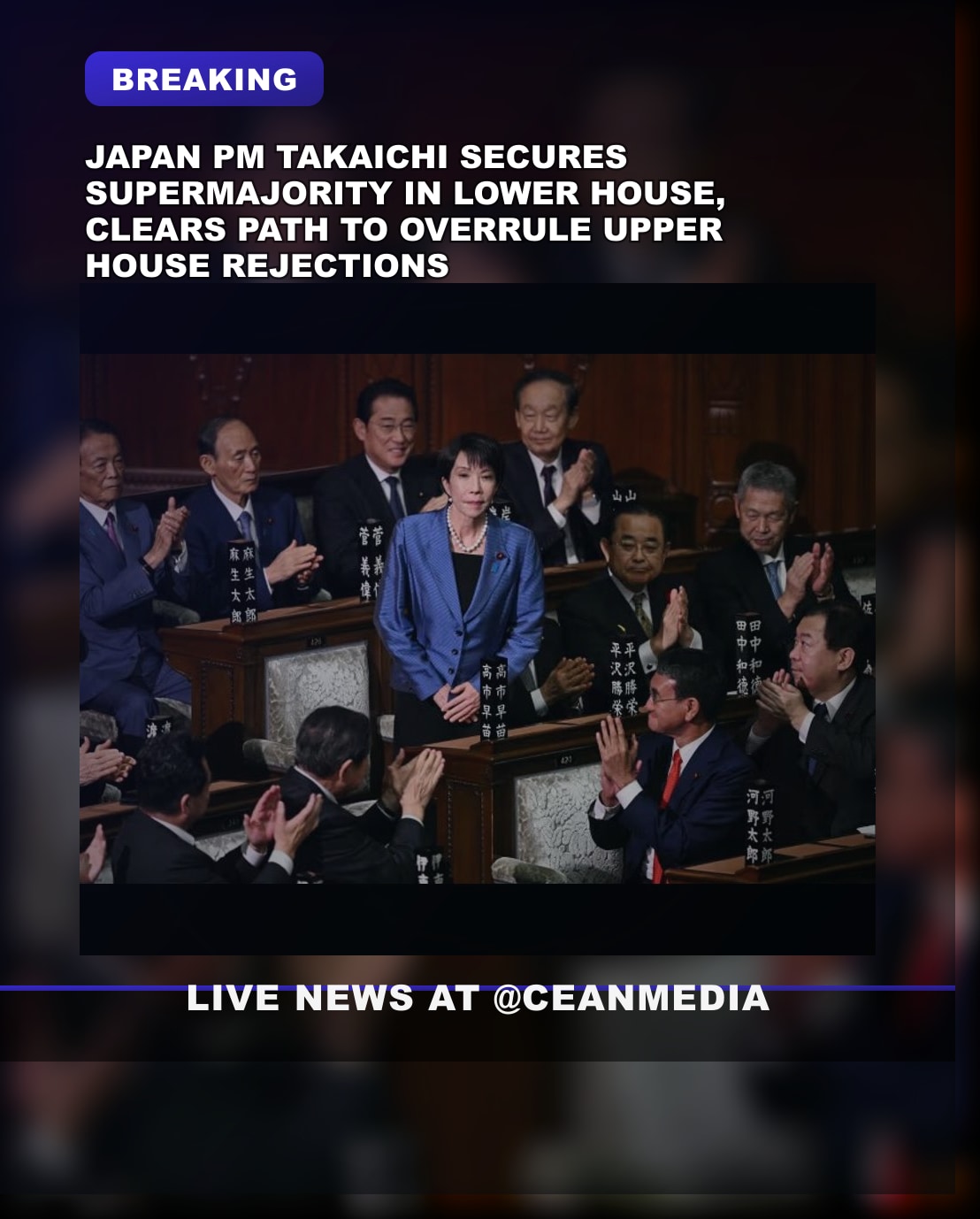
Published 2026-02-09

Summary: Japanese Prime Minister Sanae Takaichi and her governing coalition have secured a sweeping lower-house majority, surpassing the two-thirds threshold and enabling a stronger push to advance her legislative agenda, including potential shifts in security and immigration policy.
What We Know
- The Liberal Democratic Party and coalition partners are reported to have secured a sweeping or supermajority in the lower house.
- Early indications suggest a seat tally well above the 2/3 threshold required to override upper-house rejections on legislation.
- The development allows the administration to press forward its legislative agenda with greater confidence in the lower house.
- International reaction includes congratulations from India’s Prime Minister Narendra Modi, underscoring the strategic importance of Japan-India ties.
- Media reports characterize the victory as a potential shift to a more assertive policy stance on security and immigration, among other areas.
What’s Still Unclear
- Exact seat counts beyond “at least 316” and confirmation of a formal official result.
- Specific policy measures and reforms that will be prioritized in the new term beyond general directions.
- Details on coalition composition and post-election cabinet lineup.
- How the upper house may respond to the expanded mandate, including any planned negotiations or compromises.
Context
In parliamentary systems, a supermajority in the lower house provides the governing party with enhanced ability to pass legislation, including overriding upper-house rejections. The outcome may influence Japan’s security, immigration, and economic policy directions over the coming term. International observers are watching how the new mandate will affect regional dynamics in East Asia and relations with partners such as India.
Why It Matters
A supermajority can accelerate the passage of a government’s legislative agenda, potentially leading to rapid policy shifts and long-term institutional effects. It also shapes the political horizon for opposition parties and minority viewpoints within Parliament.
What to Watch Next
- Official confirmation and formal seat tally from election authorities.
- Announcement of the cabinet and key policy priorities for the new term.
- Responses and interactions with major regional partners in light of the new mandate.
- Any early legislative actions that illustrate the direction of security, immigration, or economic policy.
FAQ
Q: What does a supermajority enable in this context?
A: It enables overriding upper-house rejections on legislation, allowing smoother passage of prioritized bills.
Q: Is there confirmation of the seat count?
A: Public reports indicate at least 316 seats in the 465-seat lower house, but full official confirmation may be pending.
Related coverage
- Prabowo Subianto approval rating: Indonesian President
- Thai voters three-cornered contest poll forecasts show
- Bukele safety reforms El Salvador: From Homicide Capital to
Source Transparency
- This article is based on a short preliminary brief and may not reflect the full details available in ongoing reporting.
- Source links are provided in the Sources section where available.
- A limited open-web check was used to clarify key details when possible; unclear items remain clearly marked.
Original brief: BREAKING:
Japanese PM Takaichi secures supermajority in the Lower House, winning at least 316 seats of 465, well above the 2/3 threshold (310 seats) needed
A supermajority allows her to overrider rejections of bills in the Upper House, making it possible to push through her…
Sources
- Japan Election: Sanae Takaichi Secures Resounding Win, PM Modi Sends …
- Japan's prime minister secures sweeping majority in lower house …
- Japanese prime minister's party secures supermajority in lower … – WRAL
- Japan Election: 'Iron Lady' Sanae Takaichi Secures Massive Mandate, PM …
- PM Sanae Takaichi's party set for majority in Japan parliamentary …