
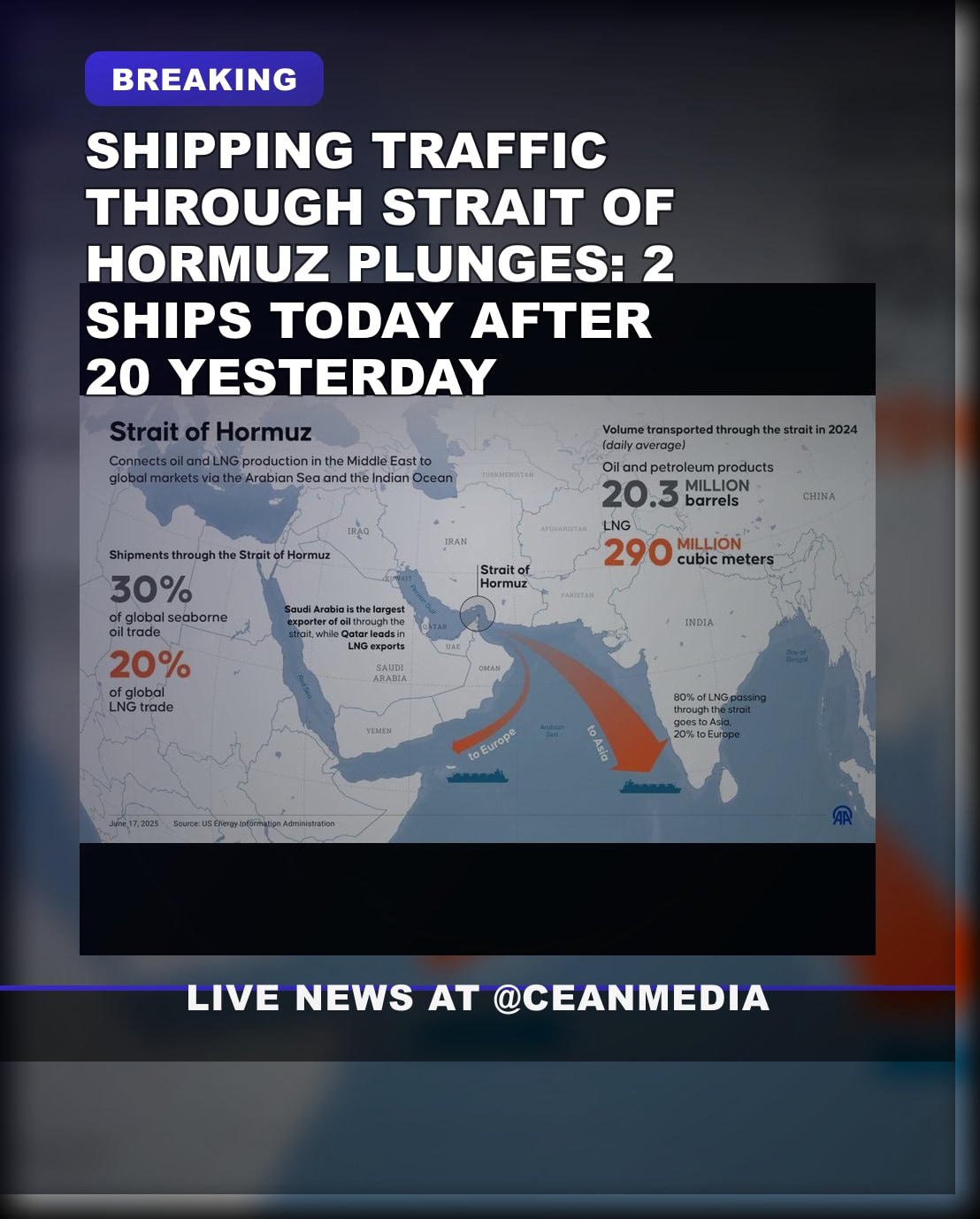
Published 2026-03-04

Summary: Shipping through the Strait of Hormuz has seen a sharp decline in recent days, with reports indicating a substantial drop in daily vessel traffic after attacks on Iran. Figures cited in various sources suggest a move from typical levels toward markedly lower counts.
What We Know
- There are reports of a sharp drop in shipping traffic through the Strait of Hormuz following attacks on Iran.
- Some sources cite a dramatic decrease in vessel traffic, with figures described as a drop of around 70 percent in the strait’s traffic levels.
- Reported daily vessel counts in the available material indicate a transition from normally high levels to current much lower numbers, though exact dates and per-day metrics vary by source.
- Coverage from major outlets highlights the strait as a vital maritime route and notes the potential global shipping implications of reduced traffic.
What’s Still Unclear
- The precise current daily vessel counts vary between sources and are not uniformly corroborated in the available material.
- The exact dates when the stated counts (e.g., normal, yesterday, today) were recorded are not consistently specified.
- The methodology used to measure traffic (vessels per day vs. another metric) is not consistently defined in the supplied information.
- Whether the drop is solely attributed to security concerns or also to other operational factors is not clearly established from the sources provided.
Context
The Strait of Hormuz is a strategic chokepoint for global oil shipments, and events in the region can influence shipping patterns, insurance considerations, and international markets. Ongoing tensions in the Middle East can affect maritime security, routing decisions, and global supply chains.
Why It Matters
Significant changes in traffic through Hormuz can impact oil transport costs, insurance premiums, and the timing of shipments for buyers and sellers around the world. Regional stability and security dynamics often influence maritime risk assessments and policy responses by governments and private sector actors.
What to Watch Next
- Official or corroborated updates on daily vessel counts through the Strait of Hormuz from reliable aggregators or authorities.
- Any statements from major shipping or oil industry groups regarding risk, routing, or insurance implications tied to the traffic changes.
- Analysis of potential global market effects if reduced Hormuz traffic persists or intensifies.
FAQ
Q: What caused the drop in Hormuz traffic?
A: Multiple sources reference attacks on Iran as a contributing factor, but the exact cause-and-effect details are not fully explicit in the available material.
Q: Are the counts of 75, 20, and 2 per day confirmed?
A: The numbers appear in the the available brief and related reports, but exact dates and uniform measurement methods are not consistently corroborated across all sources.
Related coverage
- Iranian celebratory dance death reaction sparks global
- Iranian leadership succession rumor: Mojtaba Khamenei named
- Rubio Iran war rationale shift triggers new criticism
Source Transparency
- This article is based on a short preliminary brief and may not reflect the full details available in ongoing reporting.
- Source links are provided in the Sources section where available.
- A limited open-web check was used to clarify key details when possible; unclear items remain clearly marked.
Original brief: Large ships sailing through the Strait of Hormuz per day:
Normally: 75
Yesterday: 20
Today: 2…
Sources
- After Iran Attacks, Ship Traffic Plummets in Strait of Hormuz
- Strait of Hormuz crisis explained: What it means for global shipping – CNBC
- Hundreds of Tankers Anchor Outside Strait of Hormuz as Gulf Shipping …
- Strait of Hormuz ship traffic slows to a crawl. Here's what to know …
- Escalation in the Strait of Hormuz: Shipping Disruption … – LinkedIn