
Published 2026-03-29

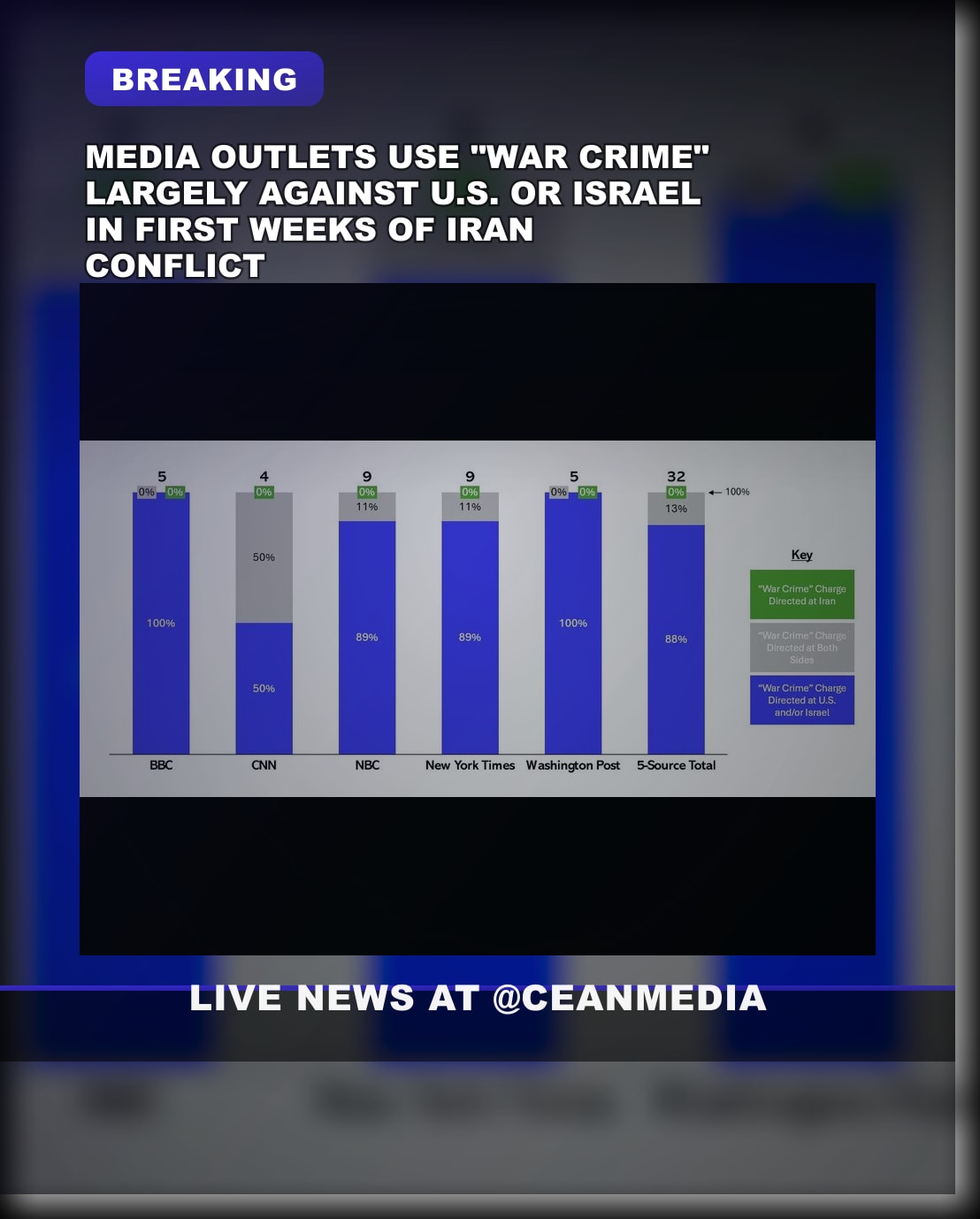
Summary: Media coverage of the Iran-related conflict has reportedly used the phrase “war crime” repeatedly, with the vast majority of usage directed at the United States or Israel. The analysis highlights concerns about framing and accountability in Western journalism.
What We Know
- The phrase “war crime” has been used in reporting on the ongoing conflict involving Iran, according to available summaries of media coverage.
- Reportedly, 88% of that usage targeted the U.S. or Israel, suggesting a potential framing pattern in mainstream reporting.
- CAMERA (the Committee for Accuracy in Middle East Reporting and Analysis) is cited in connection with concerns about media accountability regarding coverage of war crimes.
- The available sources discuss the broader issue of how Western journalism may influence perceptions of legitimacy in the conflict context.
- The material notes that mainstream media outlets reportedly used the term “war crime” across the early weeks of the conflict with Iran.
What’s Still Unclear
- Whether the term “war crime” was echoed by multiple outlets or primarily by a specific subset of coverage remains unconfirmed.
- Details about the criteria used by outlets to label actions as war crimes are not provided in the available information.
- Exact dates, locations, and names of individuals or officials referenced in the original reporting are not specified here.
- The extent to which other regional or international actors were discussed in relation to war crimes is not described.
- Independent verification or corroboration of the framing pattern across an expanded set of outlets is not available in the provided sources.
Context
Contextually, discussions of war crimes in the Middle East often intersect with debates over accountability, media bias, and framing. Analysts have long examined how language choices in reporting can influence public perception and policy debates, particularly in high-stakes security conflicts involving major regional and global powers.
Why It Matters
Understanding how media frames allegations of war crimes can affect public opinion, diplomatic narratives, and accountability efforts. If a large share of coverage concentrates blame on specific actors, it may shape policy discussions and international responses.
What to Watch Next
- Monitor subsequent media analyses for broader outlet diversity in labeling war crimes and for any corrections or refinements in framing assessments.
- Look for independent studies or cross-outlet comparisons that quantify language use and its potential impact on public perception.
- Watch for responses from media watchdog groups or press freedom organizations regarding bias and accountability in war reporting.
- Follow official statements or investigations related to alleged war crimes in the ongoing conflict for corroboration beyond media framing.
FAQ
Q: What does this analysis say about media bias?
A: It suggests a framing pattern where the term “war crime” is used frequently, with a large share directed at the U.S. or Israel, highlighting concerns about selective emphasis in reporting.
Q: Are there details about which outlets are involved?
A: The available information does not specify outlets or provide a breakdown beyond general framing observations.
Related coverage
- UN rights council appointment controversy sparks criticism
- Framing blame al sharaa: Guardian or Blame Game? Father
- Syria foreign investment drive: $1B post-sanctions rebuild
Source Transparency
- This article is based on a short preliminary brief and may not reflect the full details available in ongoing reporting.
- Source links are provided in the Sources section where available.
- A limited open-web check was used to clarify key details when possible; unclear items remain clearly marked.
Original brief: Mainstream media outlets reportedly used the phrase "war crime" nearly three dozen times in the first three weeks of the Iran conflict, but 88% of that usage was directed toward the U.S. or Israel.
CAMERA, the Committee for Accuracy in Middle East Reporting and Analysis, and its…