
Published 2026-04-07

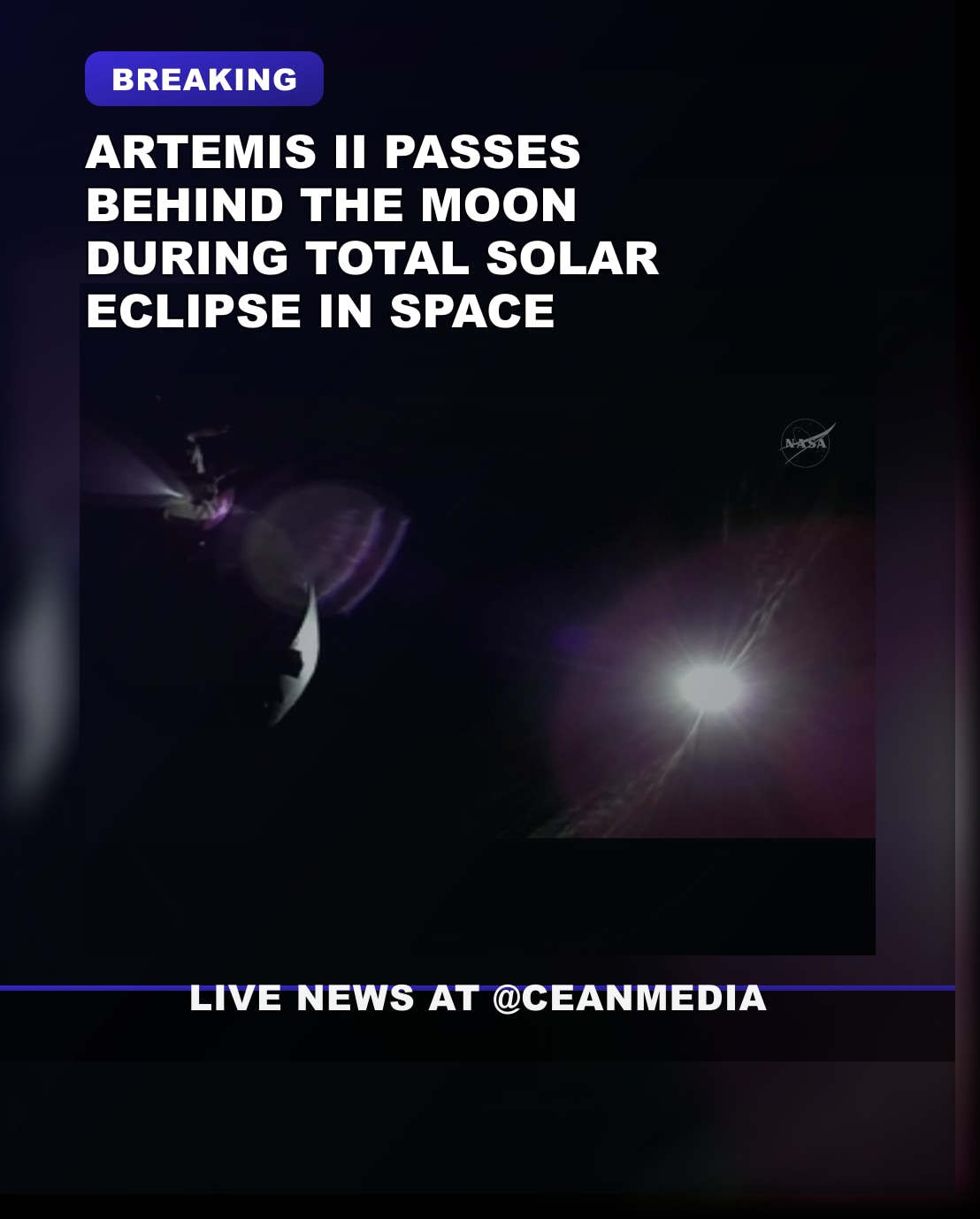
Summary: Astronauts on Artemis II witnessed a total solar eclipse while they were behind the Moon during a flyby, with NASA Flight Day 6 updates noting the event lasted about an hour as alignment of Orion, the Moon, and the Sun enabled study of the solar corona.
What We Know
- Artemis II astronauts witnessed a total solar eclipse while behind the Moon during their flyby.
- The eclipse was observed and documented as part of Flight Day 6 updates from NASA.
- NASA describes the event as lasting about one hour and involving an alignment of Orion, the Moon, and the Sun to study the solar corona.
- News coverage notes the mission team set up cameras to capture stages of the eclipse and that communication with NASA was temporarily interrupted during the event.
- The moment has been highlighted as a defining, high-visibility milestone for Artemis II, drawing attention to the rare alignment and the solar corona study opportunity.
What’s Still Unclear
- Exact timing and timestamp of the eclipse window beyond “about an hour” are not specified in the provided material.
- Whether the eclipse occurred on April 6 or April 7, 2026, remains unclear from the available excerpts.
- Additional technical details about instruments or specific corona measurements have not been detailed in the provided sources.
Context
Artemis II is part of NASA’s series of Artemis missions aimed at testing crewed deep-space operations and returning humans to the vicinity of the Moon. Solar eclipses observed from lunar orbit or behind the Moon provide scientists an opportunity to study the solar corona and refine observational techniques during planetary alignments.
Why It Matters
Moments like these demonstrate the capabilities of crewed spaceflight to perform real-time astronomical observations during orbital maneuvers, contributing to both scientific understanding and the experiential record of human space exploration.
What to Watch Next
- Follow NASA Flight Day updates for more details on Artemis II mission events and any subsequent eclipse-related observations.
- Watch for published analyses or imagery from the eclipse phase to learn about solar corona measurements.
- Monitor future Artemis missions for similar opportunities to observe solar phenomena during lunar flybys.
FAQ
Q: What exactly did the Artemis II crew observe during the eclipse?
A: The available information notes a total solar eclipse behind the Moon, observed during their flyby, with the solar corona study as part of the event.
Q: How long did the eclipse last?
A: NASA Flight Day 6 updates describe the event as lasting about one hour.
Related coverage
- Philippines inflation March surge hits two-year high in
- Japan Iran high level call preparations spark NHK report
- Artemis II crew return journey: Earth reentry after lunar
Source Transparency
- This article is based on a short preliminary brief and may not reflect the full details available in ongoing reporting.
- Source links are provided in the Sources section where available.
- A limited open-web check was used to clarify key details when possible; unclear items remain clearly marked.
Original brief: This was the moment Artemis II went behind the moon and experienced a total solar eclipse…
Sources
- Artemis 2 astronauts witness rare solar eclipse while behind the Moon …
- Artemis II live: Astronauts witness total solar eclipse after regaining …
- Artemis II's defining moment: Earthset, eclipse, and Earthrise around …
- Artemis II Live Updates: NASA Astronauts See Solar Eclipse as They Fly …
- Artemis II Flight Day 6: Lunar Flyby Updates – NASA