
Published 2026-05-04

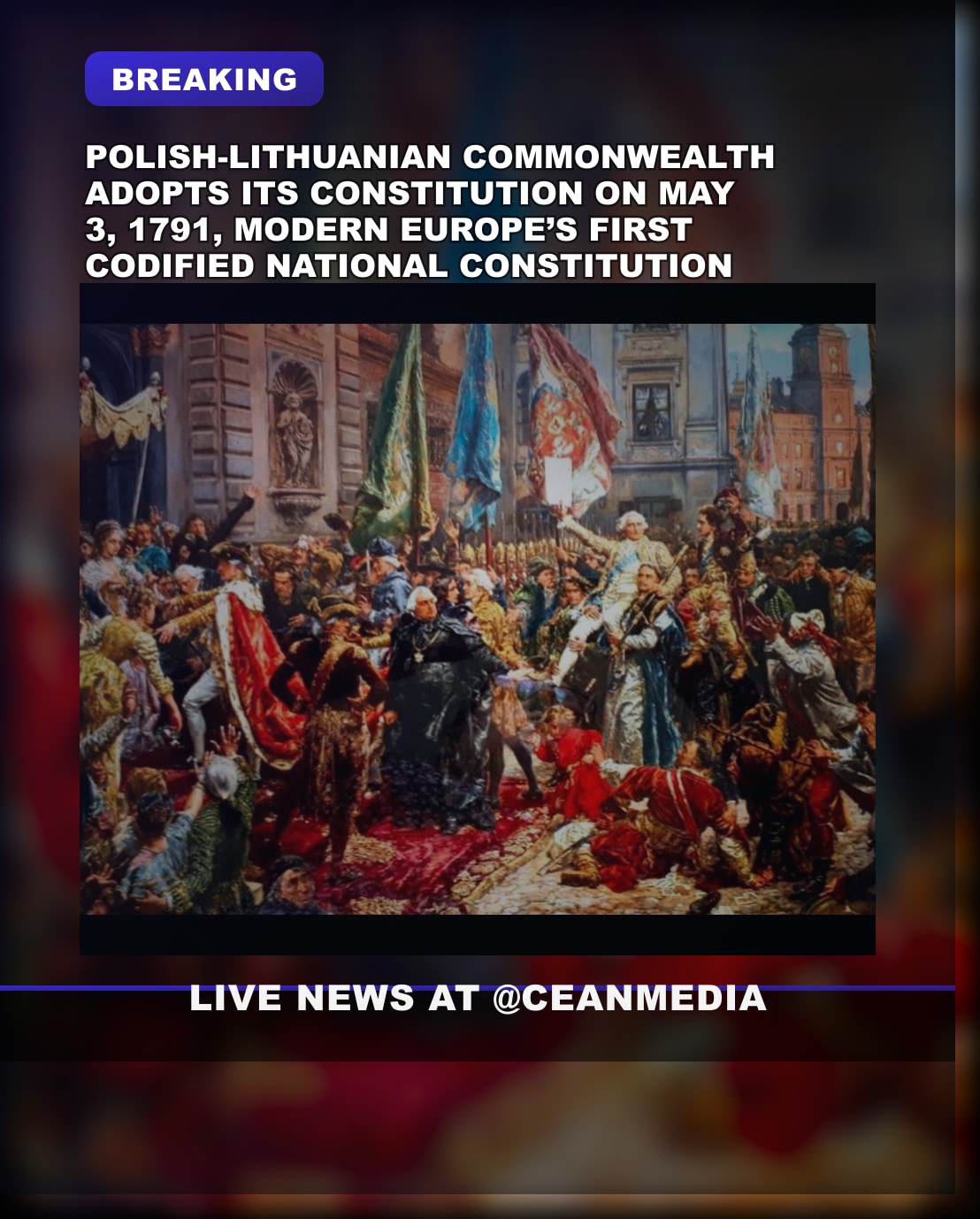
Summary: The Constitution of the Polish-Lithuanian Commonwealth, adopted on May 3, 1791, is described as Europe’s first modern codified constitution and the second written constitution in the world after the United States. The document aimed to modernize governance to support administration, an army, and social reforms to bolster the economy.
What We Know
- The Constitution of 3 May 1791 is described as the second written constitution in the world and the first modern constitution in Europe.
- Its stated aim was to modernize and streamline the system of power to enable administration, an army, and social reforms to develop the economy.
- It is linked to reform efforts within the Polish-Lithuanian Commonwealth as part of a pan-European modernization process.
- May 3rd is recognized as Constitution Day in connection with this constitutional milestone.
- Available summaries emphasize that the constitution did not save the Commonwealth, but it contributed to a broader modernization discourse in Europe.
What’s Still Unclear
- Exact legal mechanisms, provisions, and institutional changes contained in the 1791 Constitution are not detailed in the provided sources.
- Debates among historians about whether it is definitively Europe’s first modern constitution or if other regional claims exist are not resolved in the available material.
- Quantitative outcomes or reforms resulting directly from the constitution (e.g., specific administrative or economic effects) are not specified here.
Context
The 1791 constitution is presented within the broader European trend of modernization during the late 18th century, a period in which several states sought to reform governance structures to strengthen administration, military capacity, and economic development. It is typically framed as a landmark reform effort within the Polish-Lithuanian Commonwealth, reflecting a pan-European movement toward modern constitutionalism.
Why It Matters
As a historically significant document, the 1791 constitution is cited as an early example of modern constitutional design in Europe and is connected to a wider modernization wave in Europe. Understanding its aims helps contextualize late 18th-century governance reforms and national discussions about balancing power, reform, and state capacity.
What to Watch Next
- Further analysis of the 1791 Constitution’s specific provisions and institutional reforms.
- Scholarly discussion on the constitution’s long-term impact and its role in European constitutional history.
- Comparative assessments with other early modern constitutions to clarify claims about being Europe’s first modern constitution.
- Commemorations and public discourse around Constitution Day and related anniversaries.
FAQ
Q: What is the significance of the 3 May 1791 Constitution?
A: It is described as Europe’s first modern codified constitution and the second written constitution in the world, contributing to modernization efforts in the region.
Q: Did the constitution ensure the survival of the Polish-Lithuanian Commonwealth?
A: Available information notes that the constitution did not save the Commonwealth, though it is framed as part of a broader modernization process.
Related coverage
- Ohio competitive for Democrats as polls show gains
- Poland-Lithuania 3rd of May Constitution equality
- America First event Columbus Ohio unites figures across
Source Transparency
- This article is based on a short preliminary brief and may not reflect the full details available in ongoing reporting.
- Source links are provided in the Sources section where available.
- A limited open-web check was used to clarify key details when possible; unclear items remain clearly marked.
Original brief: The Constitution of the Polish-Lithuanian Commonwealth was adopted on May 3rd 1791.
It was modern Europe’s first codified national constitution and the second in the world after the USA.
Happy Constitution Day!…
Sources
- Constitution of 3 May 1791 – Wikipedia
- PDF The Constitution of 3 May 1791 – Polish History
- PDF Constitution of 3 May 1791
- The Constitution of 3 May 1791 — Google Arts & Culture
- Constitution of 3 May 1791 – Wikisource, the free online library